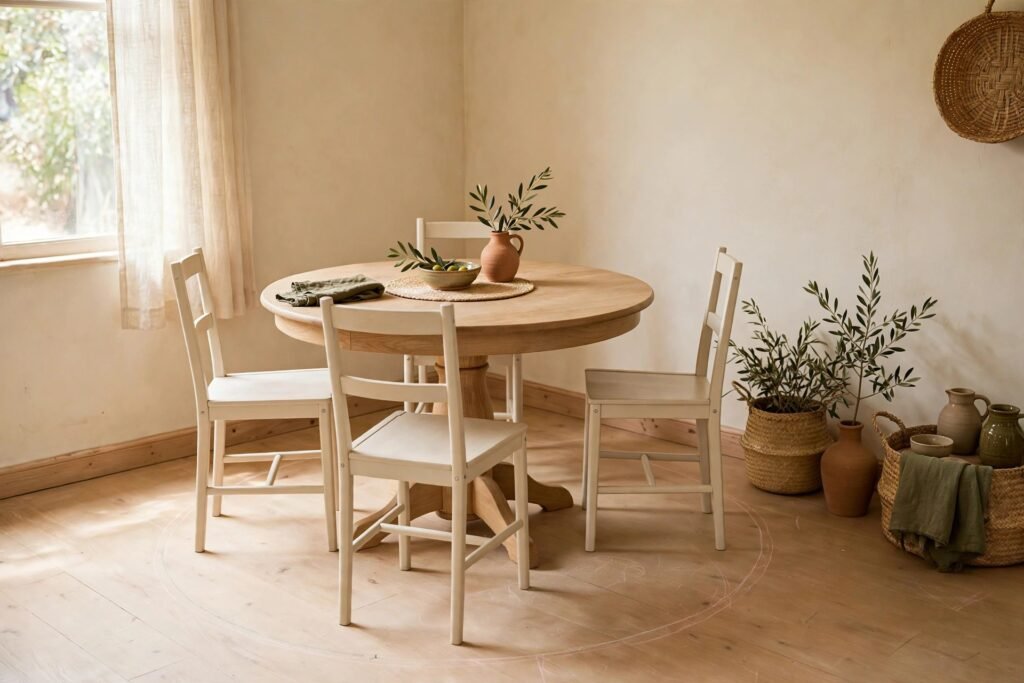
Small dining room ideas work best when the room is measured before anything is bought. A table that fits with room to pull out every chair, a light hung low enough to warm the plates, and one wall doing the decorating turn a tight corner into the room where everyone gathers. The 15 ideas below are organised by the problem each one solves, from the table shape to the storage, so each idea fits the dining room it was made for.
The colour story for this look is warm and earthy — terracotta, olive green, warm cream, and natural wood, with woven textures and handmade ceramics to soften the edges. Daylight does the styling at lunch, and warm low light takes over in the evening, so every idea is chosen to look good in both — nothing here needs a large footprint or a renovation. Pick the table first, dress the wall behind it, and let the rest of the room stay calm around it.
Small Dining Room Ideas: 15 Ways to Make a Tiny Table Feel Generous
1. Choose a Round Pedestal Table to Free the Corners
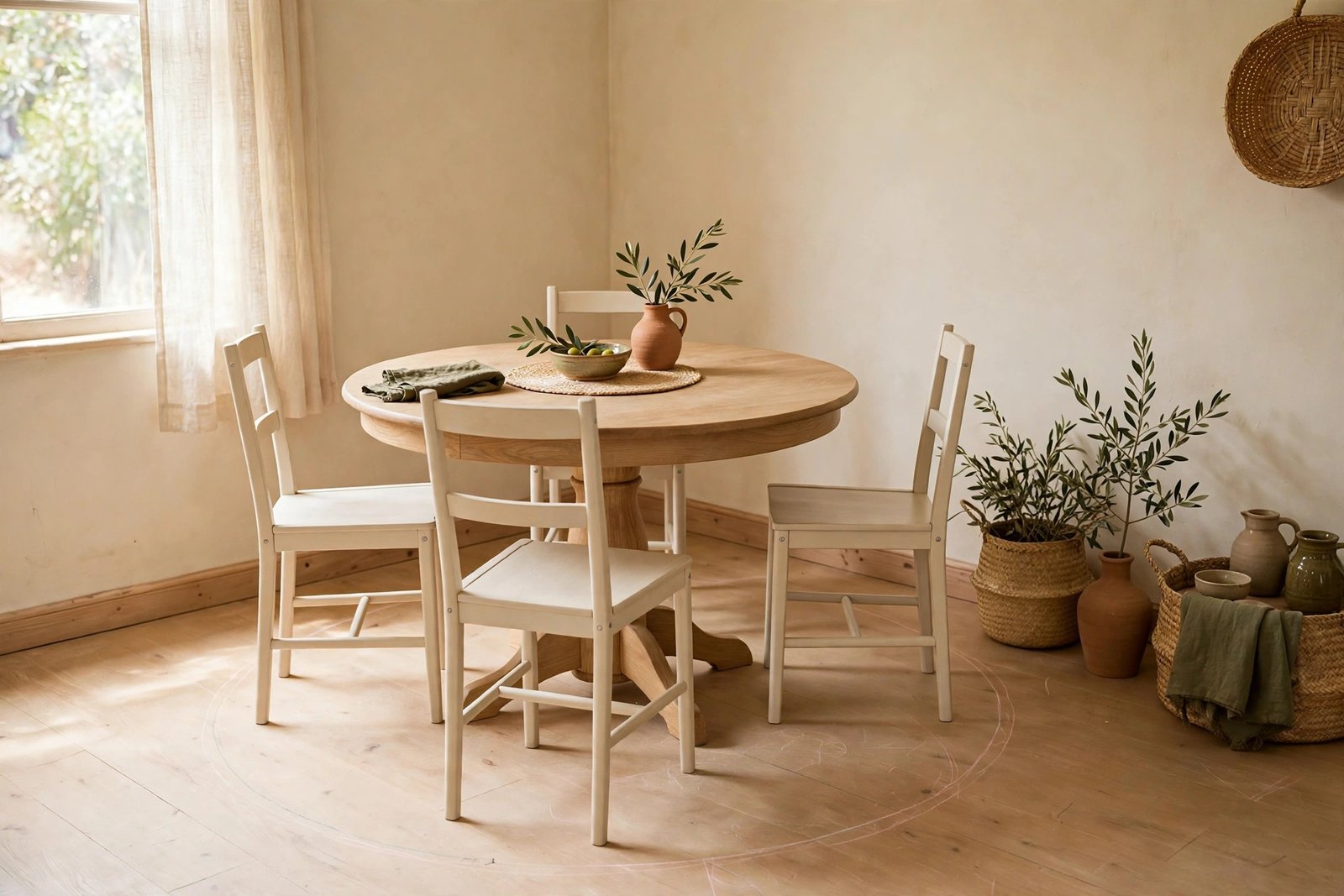
Choose a round pedestal table and the corners of the room disappear as a problem. A round top about 110 cm across seats four comfortably, and the single central pedestal leaves legroom all the way round, so no one sits with a table leg at their knee. The shape is the whole technique — a square table in the same spot wastes its corners and blocks the walkway, while a round one lets chairs pull out at any angle. A light oak top suits a pale room best, and the same measure-first rule that works in a small living room applies here: tape the table outline on the floor first, and leave at least 75 cm behind every chair for someone to stand up.
2. Build a Banquette Along One Wall

Build a banquette along one wall and the seating problem solves itself. A bench about 45 cm deep and 45 cm high, fixed to the wall with a cushion on top, seats two or three people where two chairs would fit, and the space underneath holds table linens, board games, or the high chair. The fixed bench is the technique — it never needs pulling out, so the walkway stays clear even when the table is full. Cream or oatmeal cushions in a washable fabric suit a family dining room best, and a hinged seat lifts to reveal the storage without moving a single cushion. The same banquette idea anchors a breakfast nook in the corner, where the bench meets the wall on two sides.

3. Hang One Pendant Low Over the Table

Hang one pendant low over the centre of the table and the whole room gathers around the glow. A single shade about 30 to 40 cm across, hung so its base sits roughly 75 cm above the tabletop, pools warm light on the plates and leaves the corners of the room in soft shadow. One pendant is the technique — two small ones over a small table split the light and crowd the ceiling, while a single shade gives the room one clear focal point. Warm white bulbs suit a dining room best, and a dimmer on the switch lets the same pendant serve a bright family lunch and a low evening meal. Keep the cord short enough that no one sees the bulb from a seated position.

4. Hang a Mirror Opposite the Window to Double the Light

Hang a large mirror on the wall opposite the window and the room gains a second window. A mirror about 90 cm tall in a slim frame catches the daylight and throws it back across the table, so a north-facing dining room feels bright at lunch without a single extra lamp. The placement is the technique — opposite the window, not beside it, so the glass reflects the view and the sky rather than a blank wall. A thin brass or pale wood frame suits a warm room best, and the mirror doubles as the wall decor, so the wall needs nothing else. Hang it at seated eye level, with its centre roughly 150 cm from the floor, so diners see the room reflected rather than the ceiling.
5. Pick Slim Armless Chairs That Slide Fully Under

Pick slim armless chairs that slide fully under the table and the floor stays visible when no one is eating. Armless chairs about 45 cm wide with a slim seat and straight legs tuck right under the tabletop, so a four-chair dining set reads as a table and nothing else between meals. The tuck is the technique — chairs with arms or a wide splayed base stick out into the walkway and make the room feel full even when it is empty. Pale wood or a light woven seat suits a small room best, and a wipe-clean seat fabric earns its place in a room where food is served daily. Measure the table apron height before buying, since the chair seat must clear it by a few centimetres to slide all the way in.
6. Zone the Table with One Rug

Zone the table with one rug and the dining area reads as a room of its own, even inside an open-plan space. A low-pile rug about 60 cm wider than the table on every side gives every chair room to pull out without catching an edge, and the border of rug around the table draws the eye to the meal. The size is the technique — a rug that only just fits under the table legs makes chairs wobble on its edge, while one that runs to the wall swallows the room. Warm cream or a soft pattern in the room’s colours suits a dining rug best, and a flat weave cleans easily after spills. The same runner logic dresses a Christmas table in the same room, where a runner and a rug share one colour story.
7. Float a Slim Sideboard Against the Wall
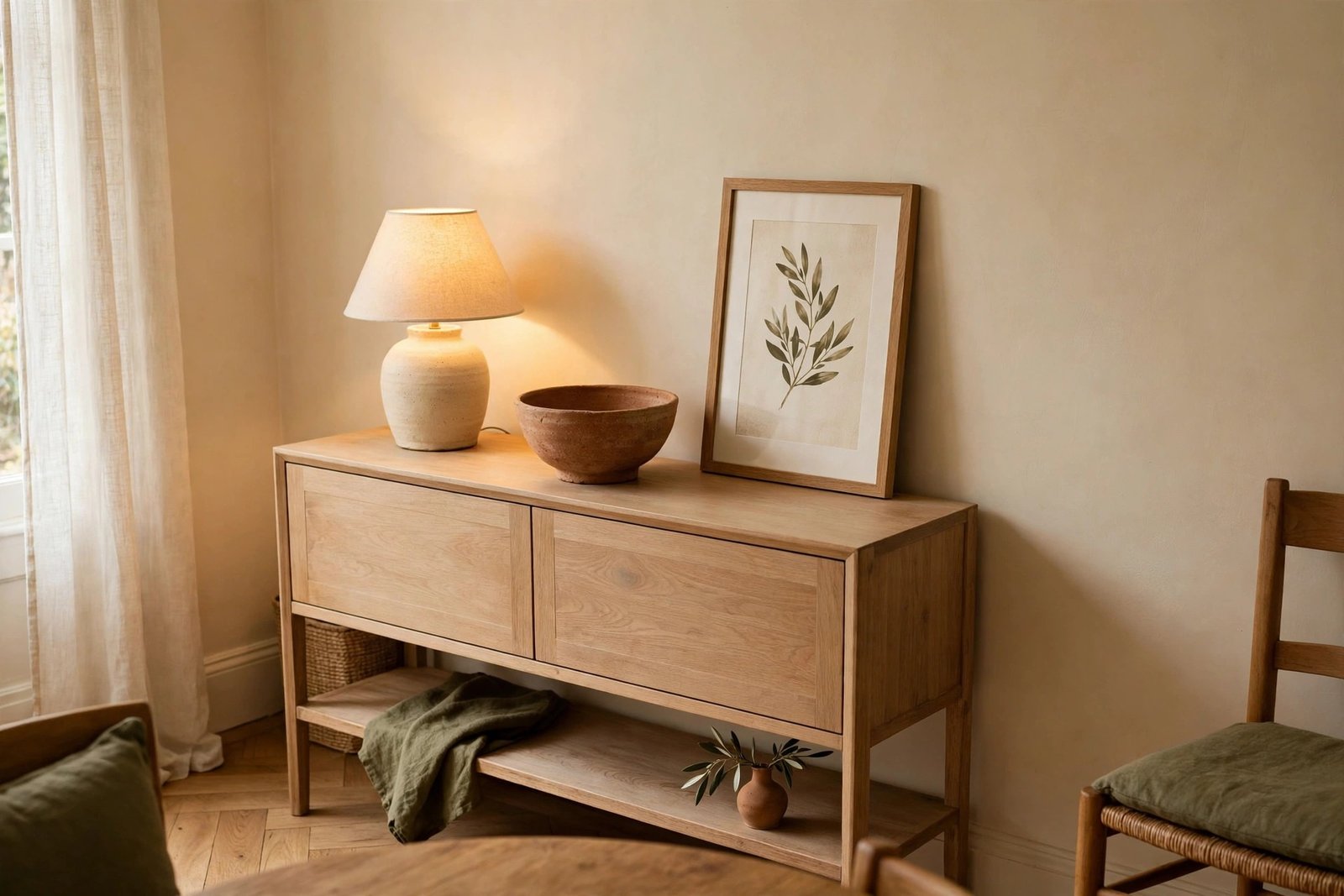
Float a slim sideboard against the wall and the table stops carrying everything. A sideboard no deeper than 40 cm holds plates, glasses, and serving dishes within arm’s reach of the table, and its top becomes the room’s serving surface at dinner and its display surface between meals. The slim depth is the technique — a standard sideboard eats 50 cm of floor the room cannot spare, while a slim one leaves the walkway clear. Light oak or painted cream suits a small dining room best, and two doors with one shelf inside hold more than open shelving, since nothing needs to look tidy. Keep the top dressed with three pieces only — a lamp, a bowl, and one framed print leaning on the wall — so the surface stays useful.
8. Add a Two-Tone Wall to Give the Room Height
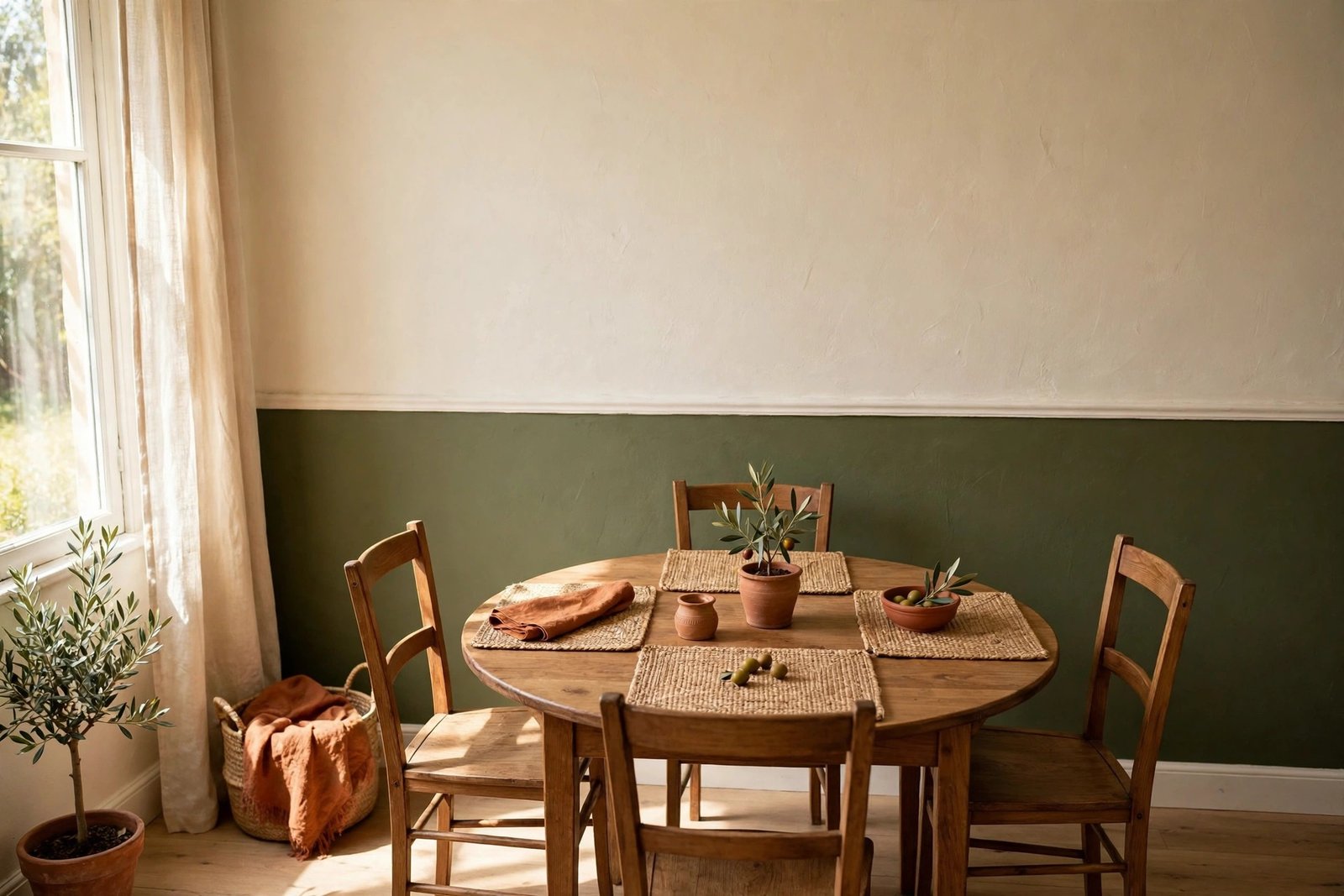
Add a two-tone wall behind the table and the room gains height without a single new piece of furniture. Paint the lower half of the wall a deep tone — olive green, warm terracotta, or dusty navy — and keep the upper half warm cream, with the split at chair-rail height, about 90 cm from the floor. The split is the technique — the deep lower half grounds the table and hides scuffs from chair backs, while the pale upper half keeps the ceiling feeling high. A chair rail or a simple painted line marks the split cleanly, and the deep colour should echo one colour already in the room, such as the rug or the cushions. This treatment suits the wall the table sits against best, where the two tones frame every meal.
9. Fix a Fold-Down Leaf for Extra Seats

Fix a fold-down leaf to the wall beside the table and two extra seats appear only when they are needed. A hinged leaf about 60 cm wide, mounted at table height on a bracket, folds flat against the wall on ordinary days and swings up to join the table when guests arrive. The bracket is the technique — a folding bracket rated for the load holds the leaf level with the tabletop, so a plate sits flat across the join. Match the leaf to the tabletop in wood or paint, and keep two folding chairs tucked behind the sideboard for the nights the leaf comes up. A wall with no door swing suits the leaf best, since the folded leaf needs a clear stretch of wall to sit flat.
10. Put the Overhead on a Dimmer with Warm Bulbs

Put the overhead light on a dimmer with warm bulbs and one switch serves every kind of meal. A dimmer lets the pendant run bright for homework and family lunch, then drop to a low glow for evening meals, when the table becomes the brightest thing in the room. The warmth is the technique — bulbs around 2700K keep skin tones and food looking warm, while cool white turns the same room blue and hard after dark. A rotary or slide dimmer on the wall switch suits most rooms, and a single dimmer costs less than a second light fitting. It is the simplest of these small dining room ideas, and the one that changes the room most after dark. Pair the dimmed pendant with one low lamp on the sideboard, so the room never falls fully dark at the edges.
11. Grow a Small Herb Garden on the Sill

Grow a small herb garden on the windowsill and the dining room gains greenery that earns its place at the table. Three small pots — basil, parsley, and mint — in terracotta or plain ceramic sit in a row on the sill, where they catch the daylight and stay within reach of the cook. The sill is the technique — herbs on a dining room sill get watered because they are seen every day, while herbs hidden in the kitchen are forgotten. Terracotta pots suit a warm room best, and a narrow tray under the row catches drips and lets the whole garden lift off in one move when the window needs a clean. Snip what the meal needs and the plants keep growing, so the sill stays green all year.

12. Hang Art at Seated Eye Level

Hang art at seated eye level and the wall works for the people actually sitting at the table. A single framed print or a pair of small frames, hung so the centre sits about 120 cm from the floor, fills the view of a seated diner instead of floating above their head. The height is the technique — art hung at standing eye level reads as a hallway picture in a dining room, while art hung low makes the table feel dressed. One large print suits a small wall best, since a cluster of small frames competes with the pendant and the mirror. Choose a print in the room’s colours, lean it rather than hanging it if the wall is rented, and keep the frame slim so the art, not the frame, carries the wall.
13. Trade the Tablecloth for a Runner and Placemats

Trade the tablecloth for a runner and placemats and the tabletop itself becomes part of the look. A linen runner down the centre with a woven placemat at each place marks every seat without hiding the wood, and the placemats protect the table where plates actually sit. The runner is the technique — it gives the table a dressed centre line while the bare wood at the edges keeps the room feeling light. Natural linen and woven seagrass suit a warm dining room best, and placemats lift off in one move for a wipe-down after a spill. Set four placemats even when only two people eat, so the table always looks ready, and keep the runner clear of hot dishes with a folded cloth underneath.
14. Carve Out a Breakfast Nook in the Corner

Carve out a breakfast nook in the corner and the smallest part of the room becomes its favourite seat. A banquette bench along two walls with a small round table pulled up to it turns a dead corner into a nook that seats three for breakfast and two for an evening meal. The corner is the technique — two walls do the work of the room’s structure, so the nook needs only a bench, a table, and a cushion to feel finished. A round table suits the nook best, since its curve leaves room to slide in from the open side. The same breakfast nook idea dresses for the season with a plaid cushion and a small wreath, while the everyday version stays plain and calm.
15. Roll In a Slim Bar Cart for Serving and Storage

Roll in a slim bar cart and the dining room gains a serving station that moves where it is needed. A two-tier cart no wider than 60 cm holds glasses, a water jug, and a small plant on its top shelf, with plates and napkins below, and it rolls to the table at dinner and back against the wall after. The wheels are the technique — a fixed drinks station claims floor space permanently, while a cart earns its corner only when it is parked. Slim brass or pale wood suits a small room best, and the top shelf should stay half empty so there is always room to set down a dish. Keep the cart against the wall the table does not use, so it never blocks the walkway to the kitchen.
These small dining room ideas work best when the table fits first and everything else earns its place around it — a round top that frees the corners, chairs that slide away, one pendant hung low, and a wall that carries the colour. Start with the tape measure, choose the table that leaves room to stand, and add one idea at a time until the room feels generous. The smallest dining rooms are often the warmest, because every piece in them was chosen on purpose.