
My room aesthetic is not a style bought in one trip or copied from one photo. It is the feeling a room gives when every choice in it — the colors, the light, the things on the walls — points in the same direction, toward the person who lives there. A room with a clear aesthetic feels calm even when it is small, because nothing in it is fighting for attention. The 15 ideas below build that feeling one step at a time, starting with color and ending with the small details that make the room unmistakably yours.
The approach here is slow and layered, not a full room makeover. Each idea stands on its own, so a room can take one change this weekend and another next month, and the look still holds together. Most of the ideas below use pieces already in the room, rearranged or restyled, and the few that need something new work best bought one at a time, after the palette and the mood are settled.
My Room Aesthetic: How to Build a Look That Feels Like You
1. Pick a Three-Color Palette and Repeat It Everywhere

Pick three colors and let them run the whole room: one main color for the big surfaces, one second color for bedding and textiles, and one accent color that appears in small doses only. A palette of cream, sage green, and warm wood works in almost any bedroom, because the cream keeps the room bright, the sage adds a calm note, and the wood warms up both. The ratio matters more than the exact shades — roughly six parts main color, three parts second color, and one part accent — and the palette is what makes a my room aesthetic feel pulled together instead of collected at random. This idea suits any room size, and it costs nothing to start, since the first step is only deciding the three colors and then moving the pieces that already match them into the places where they show. Write the three colors on a card and keep it in a drawer, so every later choice — a cushion, a frame, a throw — gets checked against the same three names before it comes home.
2. Name the Mood Before Buying Anything

Name the mood in two or three words before anything new is bought — calm and soft, dark and bookish, bright and collected — and let those words decide what comes into the room. A mood named early keeps the room from drifting into a mix of styles that never quite settle, and it turns every later decision into a simple test: does this piece sound like the words on the card, or does it sound like a different room. This step suits a room that feels stuck most of all, because the problem is rarely a lack of things and usually a lack of direction. The mood can come from one favorite object — a worn book, a soft sweater, a photograph — and the room grows outward from that one piece. Pin three or four saved photos beside the words on a board or a wall, and keep the board up while the room changes, so the mood stays visible through every choice that follows.
3. Dress the Bed in One Soft Color Story

Dress the bed in one soft color story, with the sheets, the duvet, and the cushions all drawn from the same two or three shades of the palette. The bed is the largest surface in the room, so when its colors agree, the whole room reads as calm, and when they clash, no other idea in the room can quite fix it. Pale sage with cream suits this treatment best, because the two shades sit close enough to feel like one family and far enough apart to give the bed some depth. A plain duvet with one patterned cushion, or a textured coverlet with plain pillowcases, both work, as long as the colors stay inside the palette chosen in the first idea. The same calm-color repeat that works in a cozy bedroom carries the whole look here too. This idea suits a bed of any size, and it works with the bedding already in the closet, restyled rather than replaced. Fold the top of the duvet back about a foot to show the sheet beneath, and let one cushion sit slightly forward of the others, so the bed looks made with care rather than smoothed flat.
4. Repeat One Motif in Three Small Places
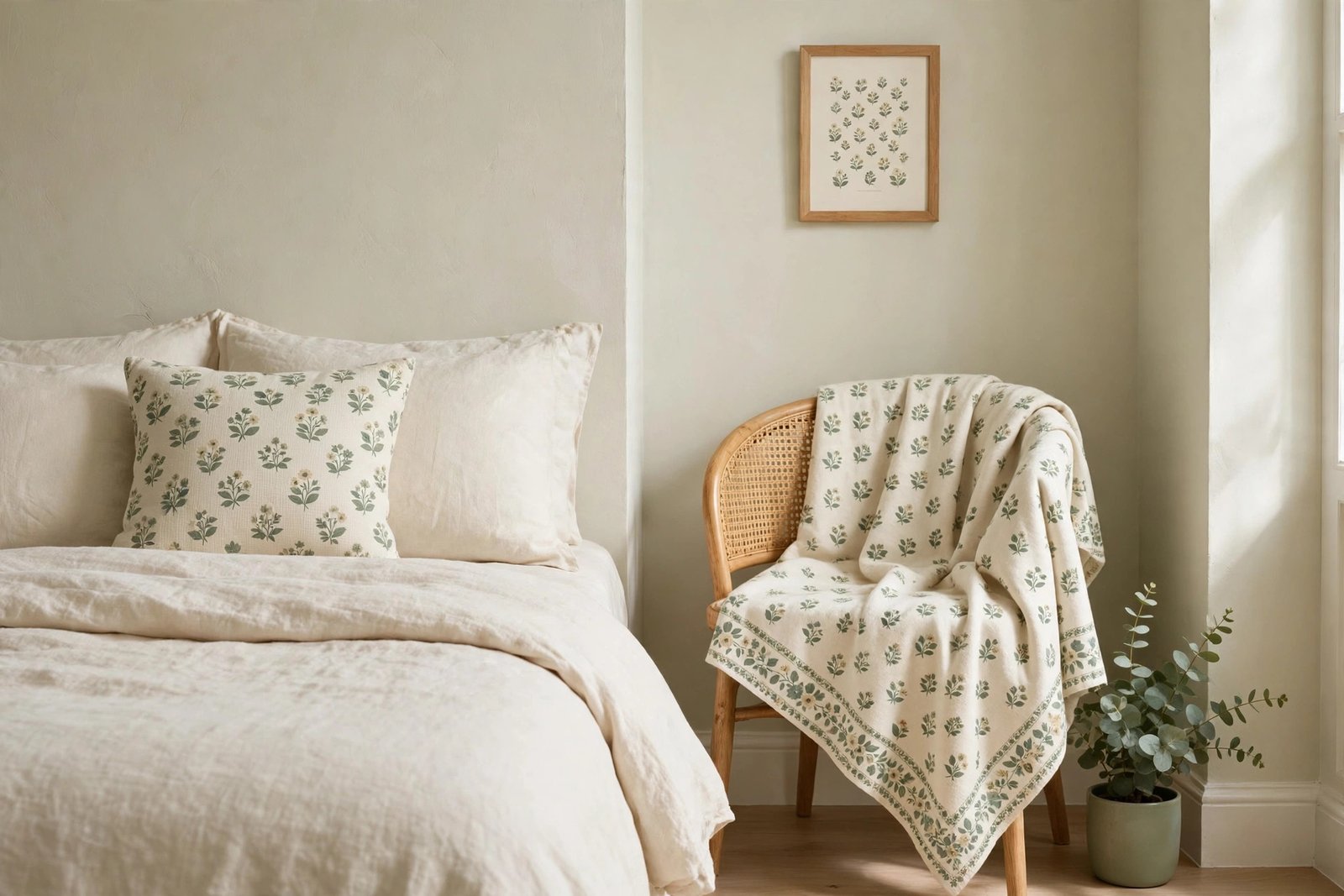
Repeat one motif — a small floral, a thin stripe, a simple leaf — in three small places around the room, and nowhere else. The motif might appear on one cushion, inside one framed print, and along the edge of one throw, and the repetition is what ties the bed, the wall, and the chair together without matching them exactly. Three is the right number because two can look like a coincidence and four starts to feel like a theme park, while three reads as a deliberate thread running through the room. This idea suits a room that already has its palette settled, since the motif is the second layer on top of the color story, and it works best when the motif stays small and quiet rather than large and loud. A floral the size of a thumbnail, a stripe no wider than a finger, or a leaf drawn in one line all do the job. Keep the three pieces in different corners of the room, so the eye travels from one to the next and the room feels connected.
5. Layer Three Kinds of Warm Light
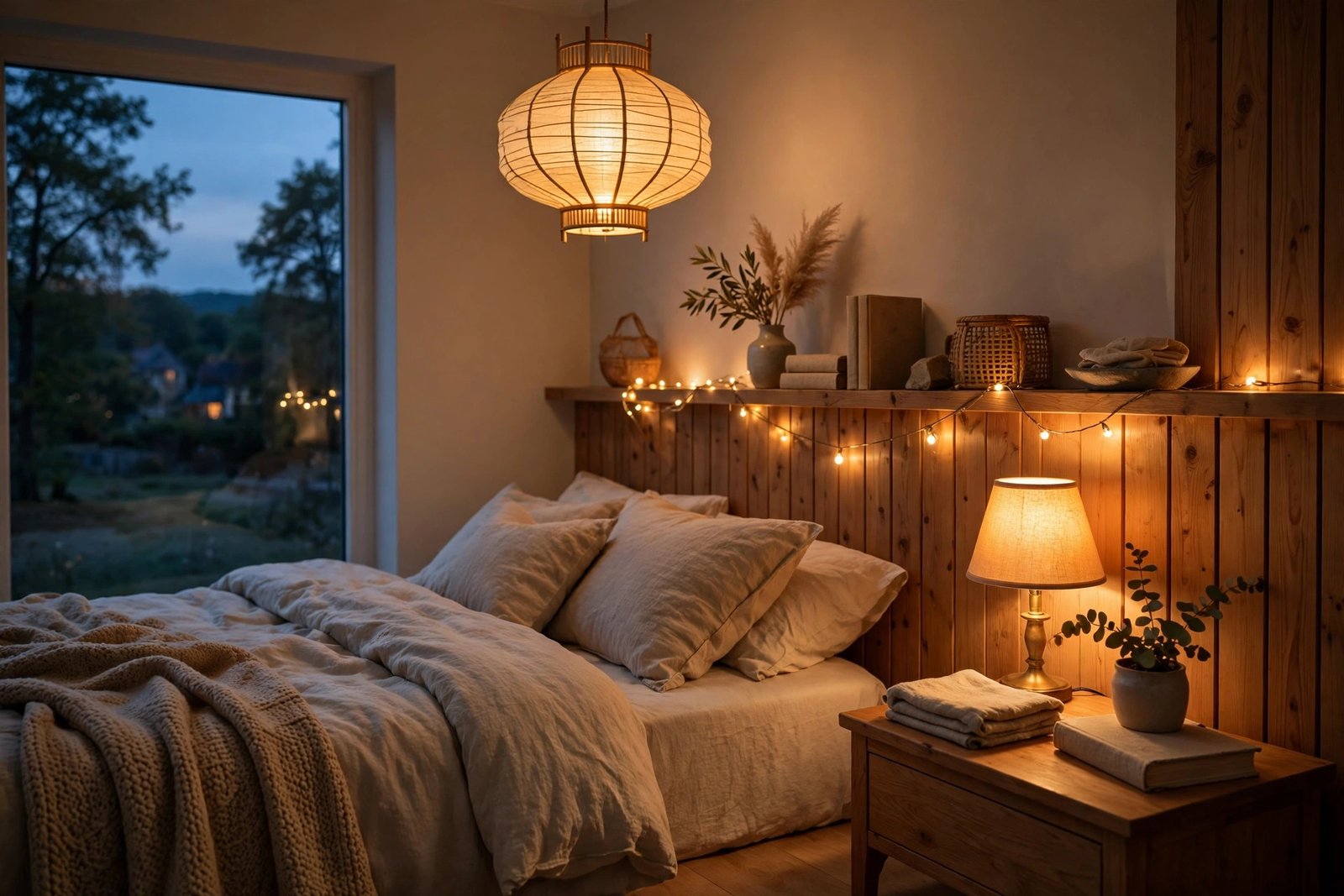
Layer three kinds of warm light — one overhead, one beside the bed, and one low and soft — so the room never depends on a single bright ceiling bulb. A paper lantern overhead gives a gentle glow that fills the room, a small bedside lamp warms the corner where reading happens, and a short strand of string lights along a shelf adds the low shimmer that makes the evening feel settled. Warm light is the fastest way to make a my room aesthetic feel cozy after dark, and one temperature everywhere — soft warm white, the same tone from all three sources — keeps the glow calm instead of busy. This idea suits a room with only one ceiling light best of all, since the two added layers do the work the ceiling light cannot. Put the bedside lamp and the string lights on separate switches or timers, so the room can run on the low layer alone in the evening, and keep every bulb the same warm tone so the layers blend into one glow.
6. Frame Three Prints in Matching Frames
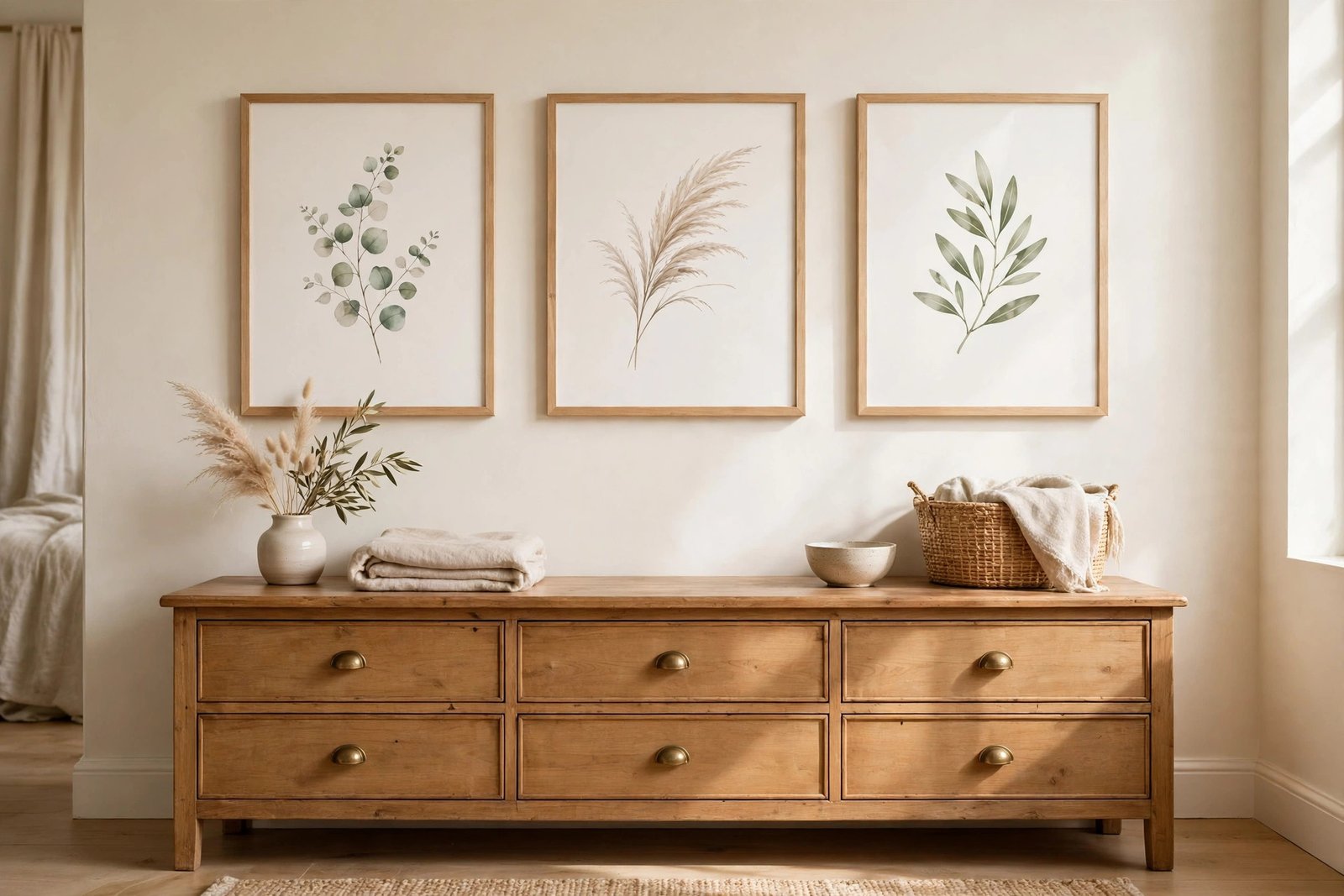
Frame three prints in matching frames and hang them in a straight row above the dresser, spaced evenly with about two inches between each frame. The matching frames are what make three different pictures read as one display, and light wood frames suit this treatment best, because they warm up the wall without competing with the pictures inside them. The prints themselves can be anything that matters — a landscape, a line drawing, a photograph from a favorite place — and the row works because the frames agree even when the pictures do not. A full gallery wall is a bigger project for another weekend; three matching frames are the lighter version of the same idea. This idea suits a wall that feels bare above a piece of furniture, and it works in a rented room too, since three small frames need only three small hooks. Hang the row so the center of the middle frame sits at eye level, about five feet from the floor, and keep the bottoms of the frames level, so the row reads as one straight line rather than three separate pictures.
7. Hang a Small Arched Mirror Above the Dresser
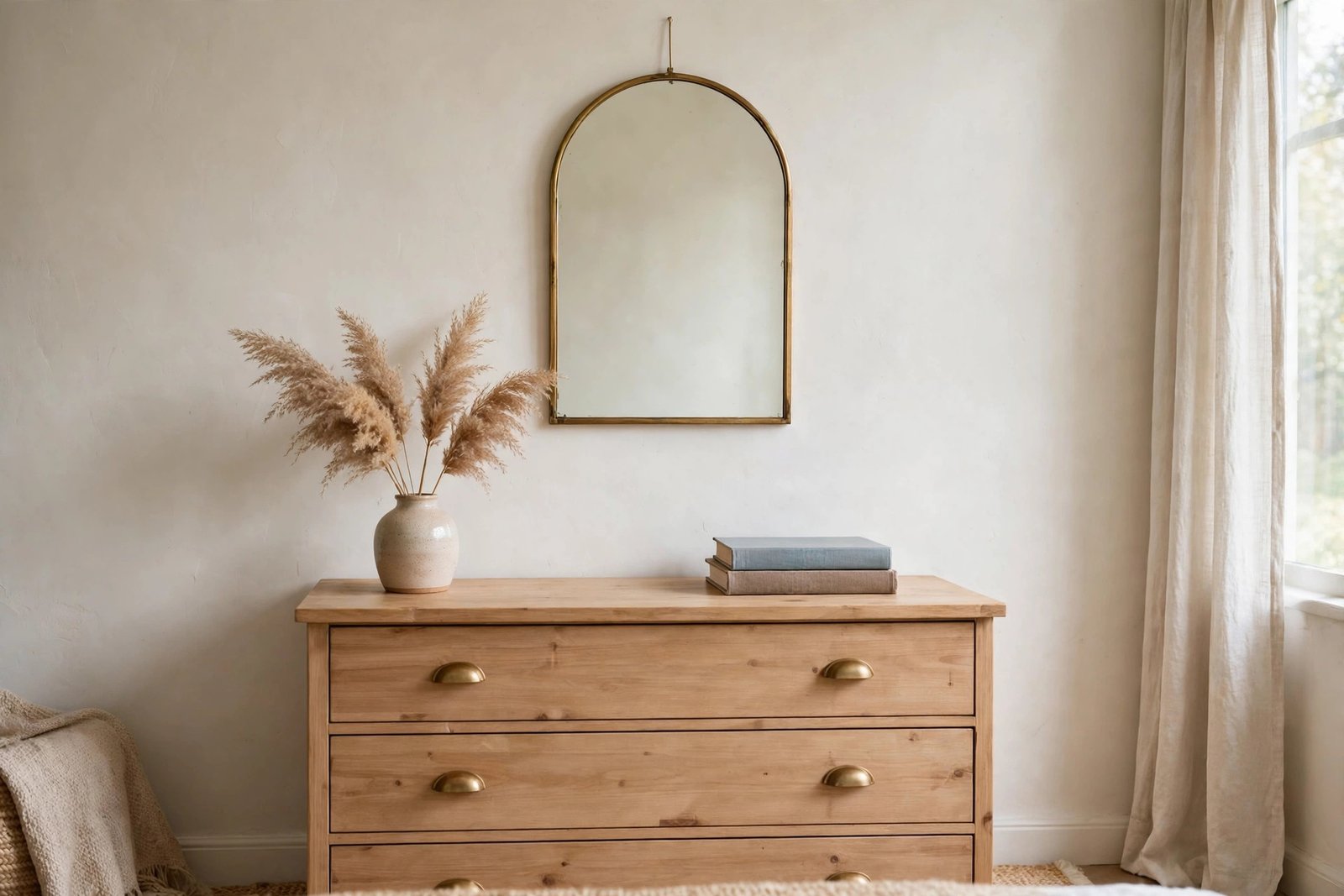
Hang a small arched mirror above the dresser, centered on the dresser and sized to about two-thirds of its width. The arch softens the straight lines of the dresser and the wall, and a thin brass frame warms the mirror up so it reads as a piece of decor rather than a plain looking glass. A mirror this size suits a dresser best because it reflects the light from the window across the room without dominating the wall, and it gives the dresser a finished top edge the way a picture gives a wall a focal point. This idea works in a bedroom of any size, and it is especially kind to a small room, where the mirror doubles the daylight without taking up any floor space. Hang the mirror so its bottom edge sits about six inches above the dresser top, and keep the dresser surface below it simple — one small vase, one stack of books — so the mirror stays the star of that wall.
8. Choose One Rug That Sets the Palette
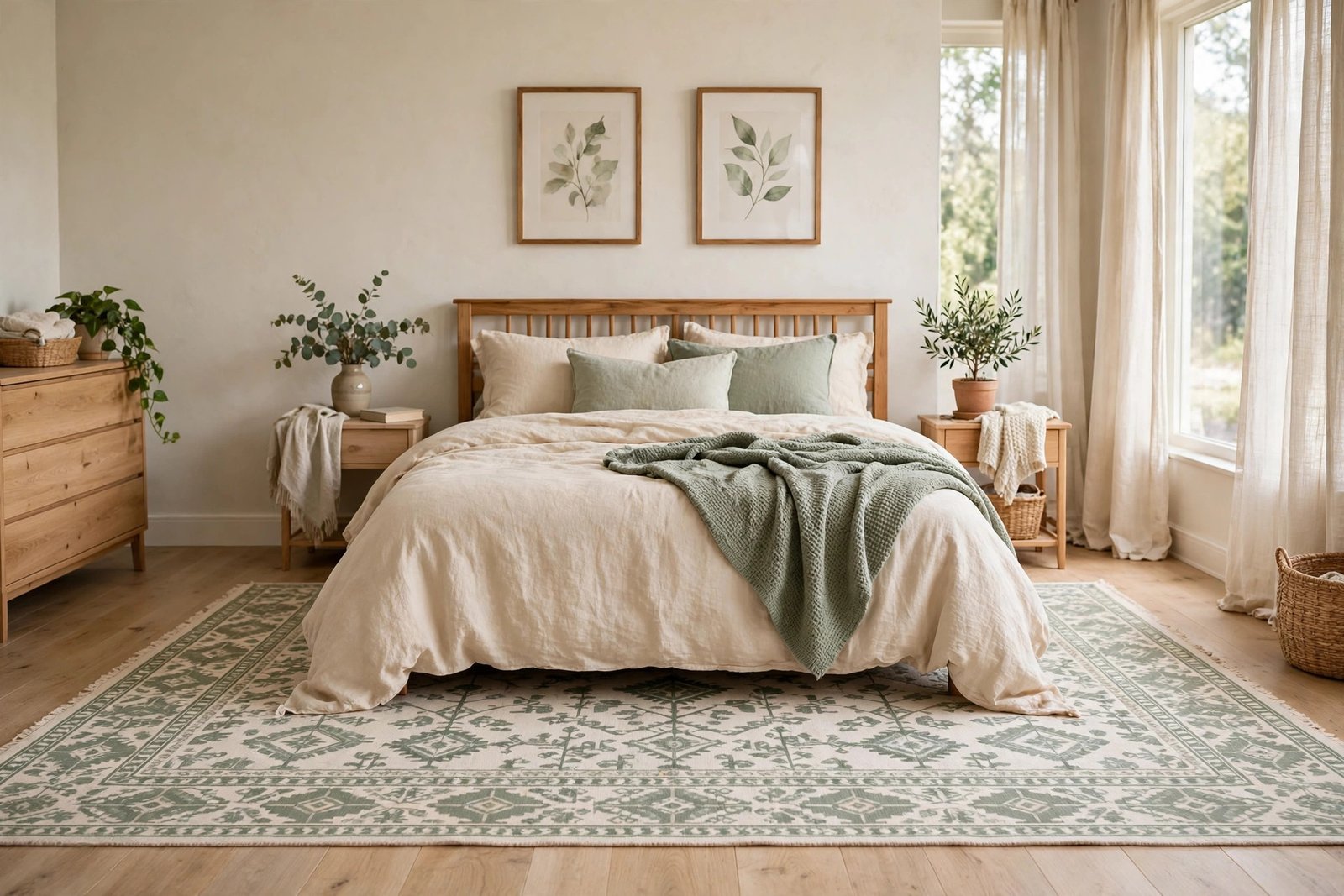
Choose one rug that carries the room’s palette and let it anchor the bed, the way a frame anchors a picture. A rug in cream with a soft sage pattern suits this treatment best, because it puts both palette colors on the floor at once, and the pattern gives the room a quiet center that the plain bedding can rest against. The rug should be large enough to run under the front two-thirds of the bed and out about two feet on each side, so feet land on softness in the morning and the bed looks grounded rather than floating on bare floor. This idea suits a room with hard floors most of all, and it works on carpet too, where a flat-weave rug adds the pattern the carpet cannot. A low pile is the practical choice here, since it stays flat under the bed legs and cleans easily, and a rug pad underneath keeps it from sliding when the bed is made each morning.
9. Group Three Plants at Different Heights

Group three plants at different heights — one trailing from a shelf, one standing on the floor, and one sitting on the windowsill — so the green moves through the room instead of sitting in one spot. The height difference is what makes the group work: the trailing plant softens the shelf edge, the floor plant fills an empty corner, and the windowsill plant catches the daylight where it is strongest. A pothos, a snake plant, and a small fern suit this grouping best, because they ask for little care and they look different enough from each other to read as a collection rather than three copies of the same plant. This idea suits a room with at least one bright window, and it works in a small room too, since the plants live on surfaces and in corners that are empty anyway. Water on the same day each week, keep the pots in the palette — cream, terracotta, or plain clay — and turn the floor plant a quarter turn every month so it grows evenly toward the light.
10. Carve Out a Small Desk Corner That Looks Like Decor

Carve out a small desk corner that looks like part of the room’s decor, not like an office dropped into a bedroom. A slim wooden desk against one wall, a chair with a soft cushion, a small lamp, and one shelf above it are all the corner needs, and the pieces should match the palette so the corner reads as a styled nook rather than a workspace. This idea suits a small bedroom best, where a full desk would crowd the room, and it works beside a window or in a quiet corner that the bed does not already claim. The desk surface stays clear except for the lamp and one small tray for pens and papers, and the shelf above holds two or three favorite pieces rather than a stack of supplies. Keep the chair pushed in when the corner is not in use, so the nook holds its shape as decor, and let the lamp share the room’s warm light so the corner glows with the rest of the room in the evening.
11. Hang a Woven Wall Hanging Above the Bed

Hang a woven wall hanging above the bed, centered on the headboard, with its bottom edge about a foot above the pillows. The woven texture softens the wall behind the bed in a way a flat picture cannot, and cream or undyed cotton suits this treatment best, because it adds warmth without adding a new color to the palette. A hanging about two feet wide suits a full or queen bed, and the fringe at the bottom gives the wall a soft edge that a framed print would leave sharp. This idea suits a room where the wall behind the bed feels bare but a heavy headboard would crowd the space, and it works in a rented room, since one small hook holds the whole piece. Hang the piece level and step back to check that it sits centered on the bed, not on the wall, and keep the bedding below it plain, so the texture of the weaving stays the focal point of that wall.
12. Style the Dresser Top in One Color Story

Style the dresser top in one color story, with every piece on it drawn from the same two shades of the palette. A ceramic vase in sage, a stack of two books with cream covers, and one small framed photo in a light wood frame suit this treatment best, because the three pieces give the dresser height, weight, and a personal note without crowding it. The rule here is three pieces and no more, arranged tallest at the back and lowest at the front, so the whole top reads as one composed display rather than a row of unrelated objects. This idea suits a dresser that has become a catch-all, and it works as a reset: clear the top completely, then put back only the three pieces that match the color story. Dust the surface once a week and keep one small tray for the everyday pieces — keys, a hair tie, a lip balm — so the styled top stays styled and the daily clutter has a place of its own.
13. Add One Vintage Piece with a Story

Add one vintage piece with a story — a brass lamp from a thrift shop, a wooden jewelry box passed down in the family, a stack of old books with worn covers — and let it be the only old thing in the room. One vintage piece gives a room character the way a signature gives a letter personality, and the piece works because it is the only one, standing out gently against the newer furniture around it. This idea suits a room that feels a little too new and a little too perfect, and it works best when the piece is chosen for its story rather than its look alone, since the story is what makes it feel personal instead of decorated. A brass lamp suits a nightstand best, a wooden box suits a dresser top, and old books suit a shelf or a desk corner. Clean the piece, give it the best spot in its corner, and let everything around it stay simple, so the vintage piece reads as a treasure rather than clutter.
14. Keep One Open Shelf for Daily Favorites

Keep one open shelf for daily favorites — the two or three books being read right now, one small plant, and one ceramic piece that gets used every day. The shelf works because it holds only what is used and loved, and nothing else, so it reads as a personal display rather than storage, and the open front means the favorite things stay visible instead of disappearing into a drawer. This idea suits a wall beside the bed or above the desk corner best, where the favorites are within reach, and it works in a small room, since one shelf takes up no floor space at all. A shelf about two feet long suits this treatment, mounted at arm’s height, with the pieces spaced so each one has breathing room around it. Edit the shelf once a month, swapping out a finished book for the next one, so the display stays current and the shelf never slowly fills up with things that no longer earn their place.
15. Finish with Scent as the Last Layer

Finish with scent as the last layer, the way light is the last layer in the evening. A reed diffuser on the dresser gives the room a steady, gentle fragrance all day, and a linen spray on the bedding before bed adds a fresh note that fades by morning, so the room smells cared for without ever smelling perfumed. A soft lavender or clean linen scent suits a bedroom best, because both read as calm rather than sweet, and one scent for the whole room keeps the layers from competing the way two different fragrances would. This idea suits any room, and it is the cheapest idea in this list, needing only the diffuser and the spray to finish the whole aesthetic. Place the diffuser where air moves past it — near the door or beside the window — and keep it away from the bedding, so the reeds scent the air and not the sheets, and refresh the spray once a week so the note stays soft rather than building up.
A my room aesthetic grows the way a room is lived in, not the way a room is bought. One palette, one mood, one motif repeated in three small places, and the light layered warm — those four choices do most of the work, and the rest is only keeping the room honest to them. Start with the palette card in the drawer, add the idea that fits the room best this weekend, and let the room become more personal with every small change, until it feels less like a bedroom and more like a place that could only belong to one person.