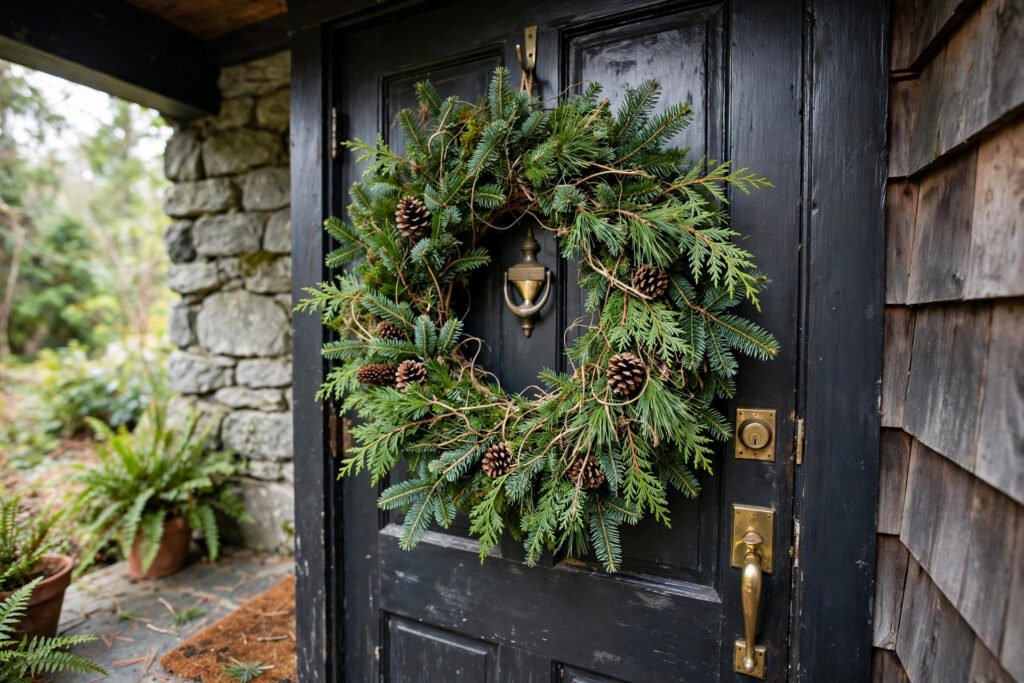
DIY Christmas wreath ideas start with a ring and a handful of honest materials — a wire frame, a grapevine base, or a plain foam ring — and grow from there. A wreath made at home carries the maker’s proportions and materials, so no two ever match, and the front door gets a welcome that no shop-bought ring can copy. The 15 ideas below cover fresh greenery, dried fruit, felt, paper, beads and baubles, and each one names its base, its materials and a practical tip for making it last the season.
Every wreath here takes an afternoon at most, and most use materials already in the house or the garden — tree offcuts, pinecones from a walk, ribbon from the drawer. DIY Christmas wreath ideas work best when the base suits the materials: wire frames for wired greenery, grapevine for tucking, foam for gluing, hoops for modern asymmetric designs. A DIY Christmas decorations afternoon pairs well with this list, since offcuts from one project often finish another.
DIY Christmas Wreath Ideas for a Handmade, Festive Home
1. Start with Fresh Fir, Pine and Cedar on a Wire Frame
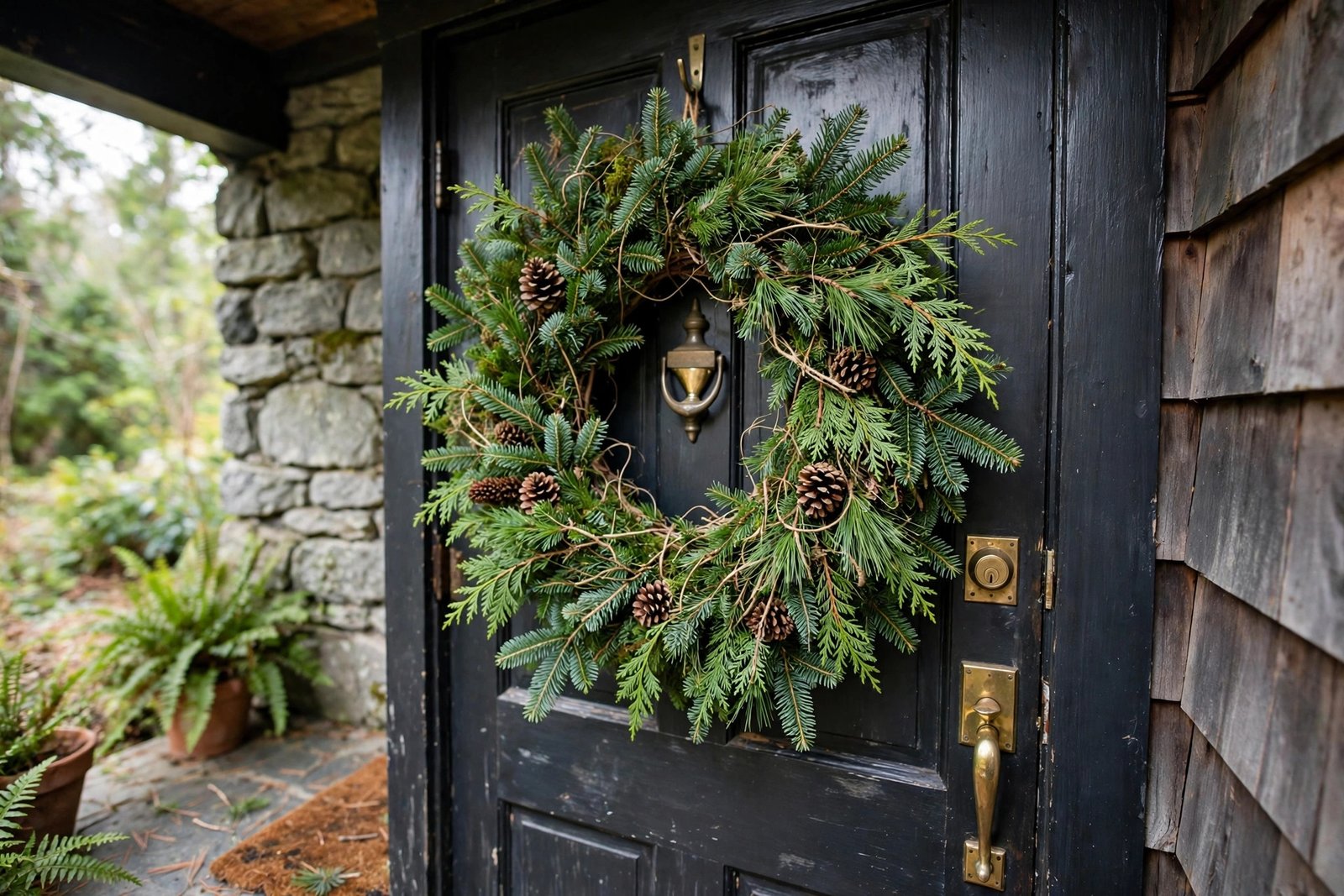
The first wreath everyone should make is three greens on one frame, and it takes about half an hour. Buy a wire wreath frame and a roll of florist’s wire, then gather short sprigs of fir, pine and cedar — tree offcuts, garden clippings, or a mixed bunch from the florist. Bundle three or four sprigs together, wire each bundle to the frame, and overlap the bundles so each one covers the last one’s wire. A few small pinecones wired in among the greens add texture. A 40 cm frame suits a standard door, while a 60 cm frame fills a wider or double door. Mist the finished wreath every few days and keep it out of direct sun, and it stays fresh from late November through Christmas Day.
2. Tuck Greenery into a Grapevine Ring
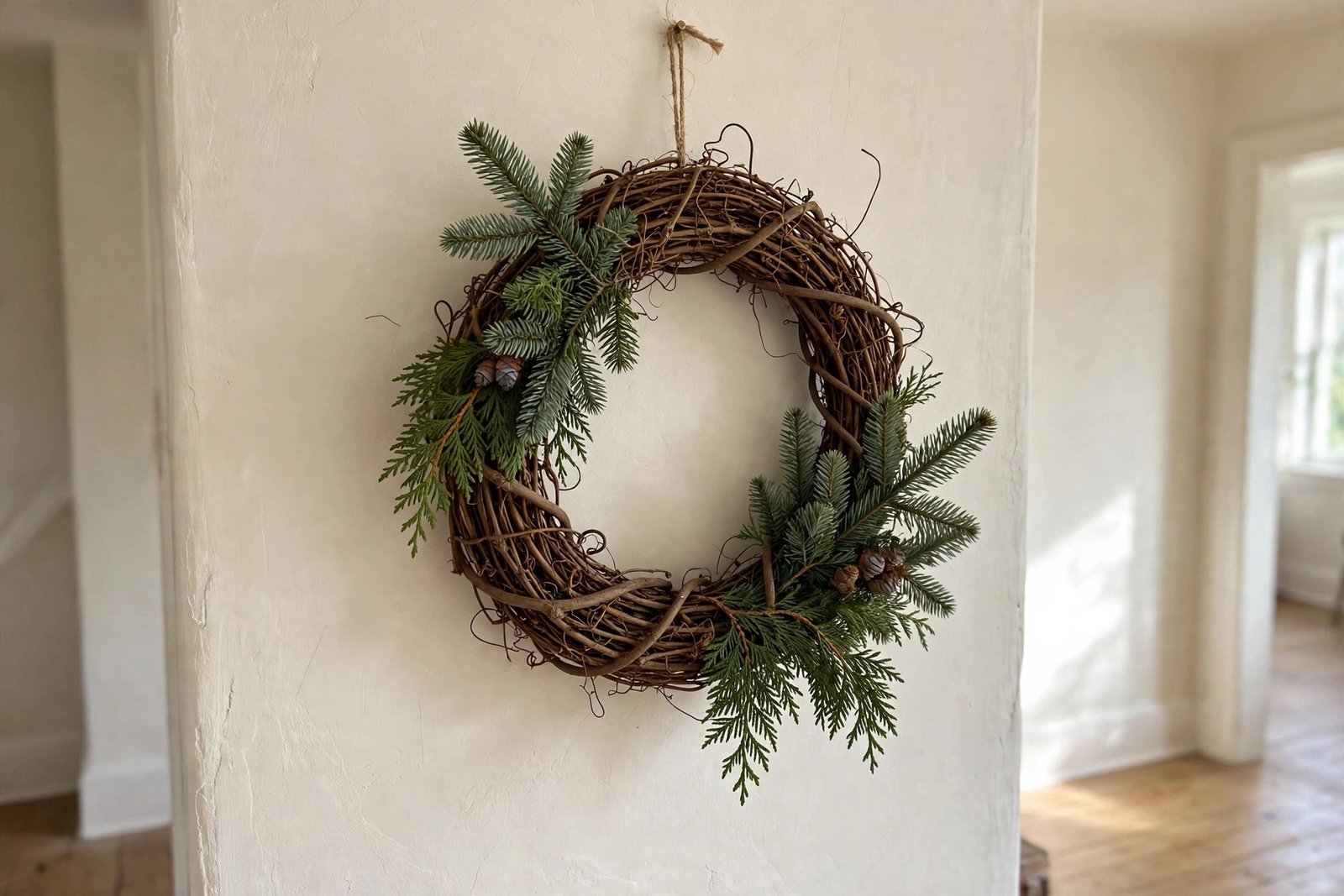
A grapevine base is the beginner’s best friend, because its twisted branches hold stems by friction and almost no wire is needed. Choose a grapevine ring about 45 cm across and push short sprigs of fir, cedar and pine into the twists, working around the ring until the vine shows only in glimpses. Add a few pinecones wired in place and a length of plain twine tied in a loop for hanging. The ring suits a wall, a window or an interior door, where its rough, woody texture reads well against smooth plaster. Because nothing is glued, the greenery can be pulled out in January and the bare ring stored flat for next year.
3. Wire Dried Oranges and Cinnamon onto Grapevine
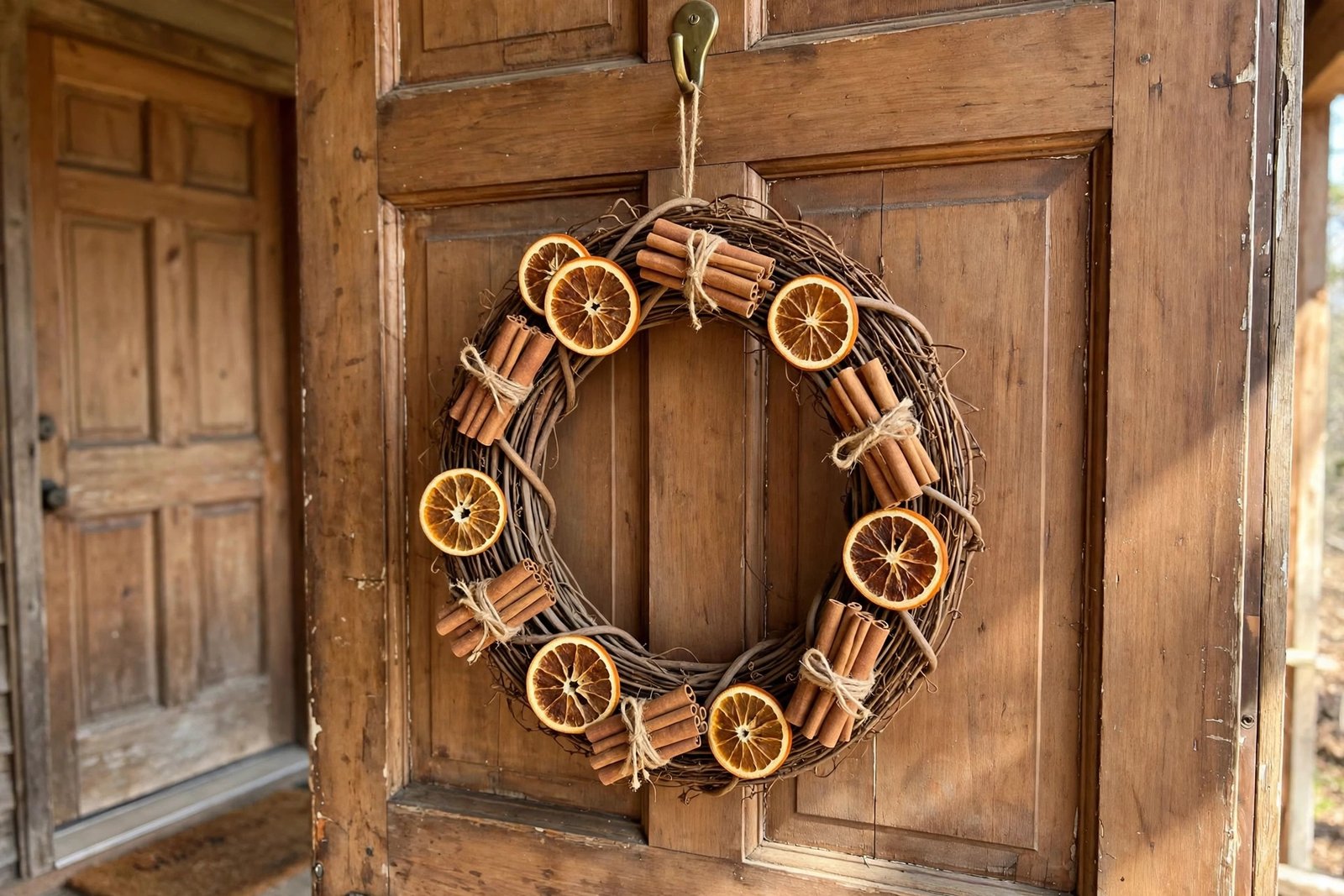
Dried orange slices give a wreath its warm amber glow and a faint citrus scent that fresh greenery alone never has. Slice two oranges thinly, dry them in a low oven until they feel crisp, then wire each slice onto a grapevine ring with a short twist of florist’s wire through the flesh. Tuck cinnamon sticks between the slices in small bundles of three, tied with twine, and space the slices evenly so the amber shows against the dark vine. The ring hangs best on a sheltered door or an interior wall, where damp cannot soften the slices. Keep a few spare dried slices in a tin, so any that darken can be swapped in seconds.
4. Build a Frosted Pinecone Ring

Pinecones make a wreath with real weight and texture, and frosting the tips turns a woodland find into a winter piece. Gather pinecones in three sizes, from small cones about 5 cm long to large ones near 15 cm, and wire each one onto a wire frame by its base, packing them tight so no frame shows. Brush the tips with white craft paint, or dust them with fake snow from a shaker while a thin coat of spray adhesive is still tacky. The finished ring suits a plain wall or a sheltered porch, where its pale tips catch the daylight. Because pinecones are heavy, hang the wreath from a sturdy hook rather than a suction cup.
5. Thread Wooden Beads onto a Brass Hoop

A bead wreath is the modern answer to the full green ring: light, quiet and finished in under an hour. Thread natural wooden beads in two sizes onto a thin brass hoop, leaving a gap at the top for a small sprig of fir or a single dried orange slice wired in place. Mix a few darker stained beads among the pale ones so the ring has rhythm rather than a flat run of colour. The hoop suits a narrow wall, a bedroom door or a window, where its slim profile never crowds the space. Hang it from a thin brass wire or a short length of ribbon, knotted at the top.
6. Layer Felt Leaves in Winter White
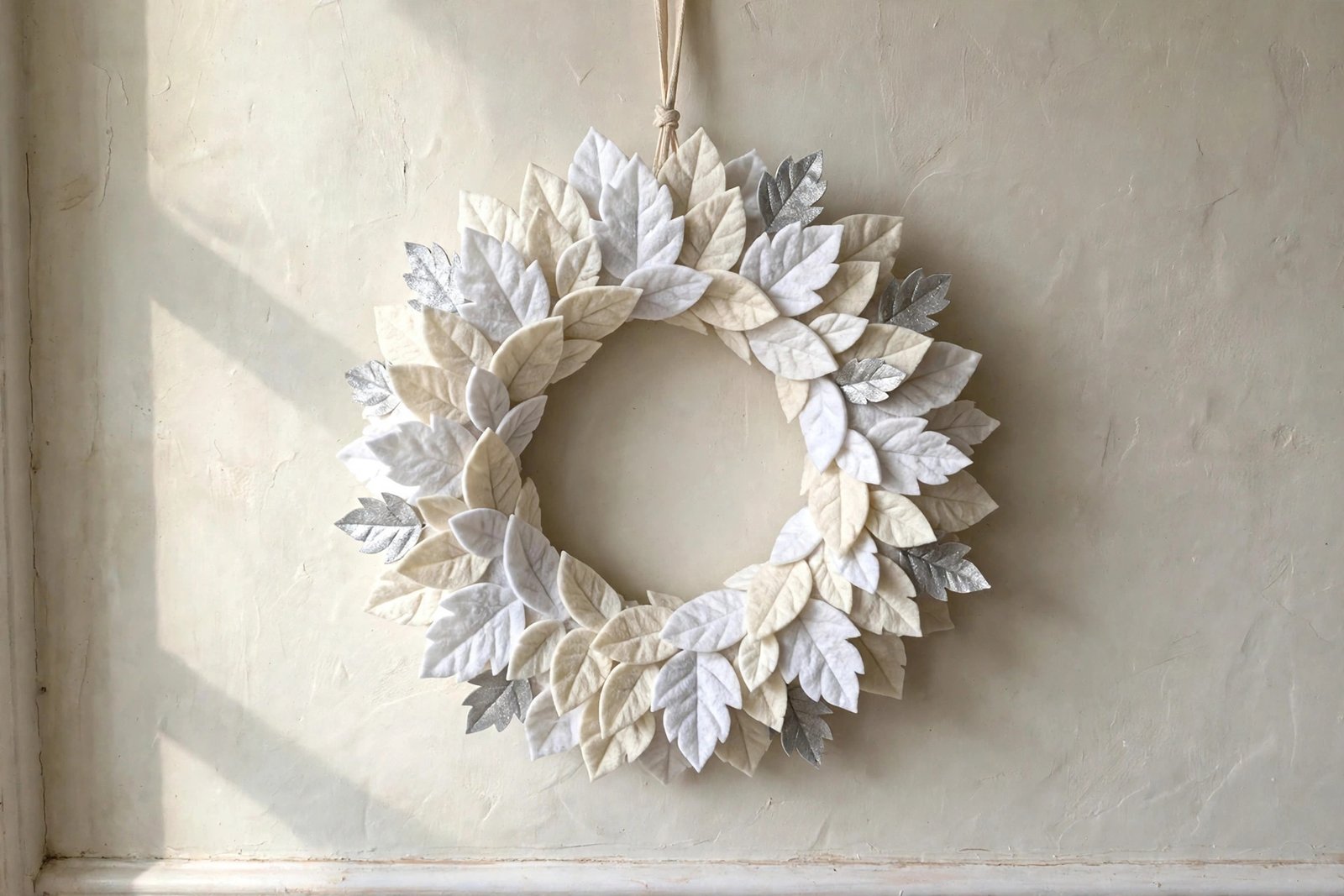
Felt leaves give a wreath a soft, handmade look that lasts for years, and winter white keeps it calm against any wall colour. Cut leaf shapes from white, cream and pale grey felt — two sizes, about 8 cm and 12 cm long — and glue them in overlapping rows onto a foam ring, starting from the outside edge and working inward. Vary the angle of each leaf slightly so the surface has movement, and tuck a few silver-painted leaves among the white ones for a frosty catch of light. The wreath suits a bedroom door or a hallway wall, where its quiet palette reads clearly. Store it flat in a box lined with tissue, and it comes out uncreased next December.
7. Fold a Paper Honeycomb Wreath
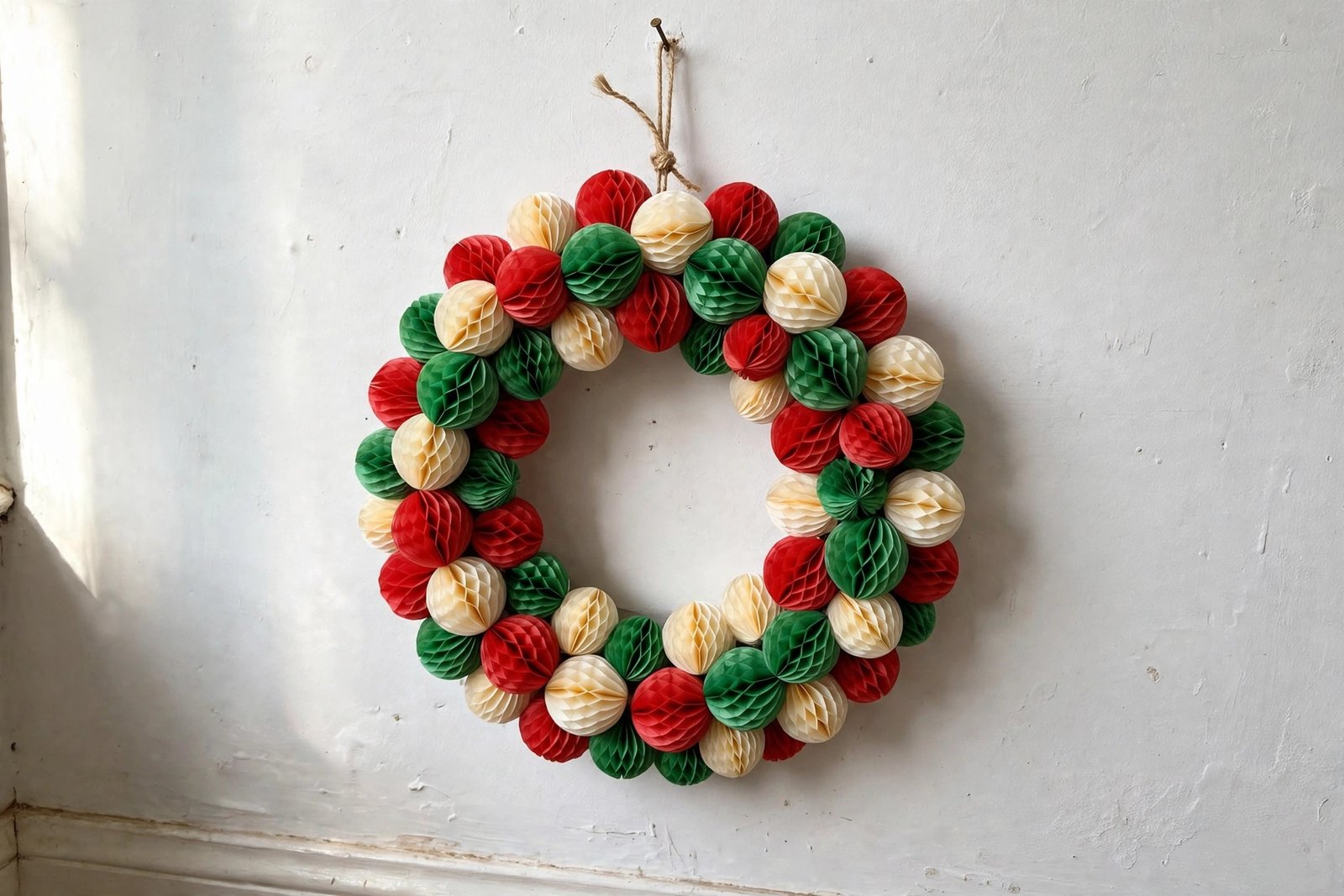
Paper honeycomb balls turn a wreath into a playful, lightweight piece that costs almost nothing to make. Buy small tissue honeycomb balls in red, green and cream, or fold them from thick card, and glue them in a tight ring onto a foam base, alternating the colours so no two neighbours match. Add a few larger balls at the bottom of the ring for weight, and a short length of ribbon for hanging. The wreath suits an interior wall or a child’s bedroom door, where its bright colours lift a plain room. Use thick card or pre-made honeycombs with strong adhesive strips, since flimsy paper sags quickly in a warm room.
8. Weave Holly and Red Berries Through Fir

Holly and berries are the most traditional wreath dressing, and they need a generous fir base to show against. Build the base from fir on a wire frame, then weave short holly sprigs through the fir so the glossy leaves sit proud of the surface. Add clusters of red berries — fresh holly berries, or wired faux clusters for a longer life — in groups of three, spaced evenly around the ring. The deep green and red suit a dark-painted door best, where the contrast does the work. Wear gloves while handling holly, since the leaves are sharp, and keep the wreath where small hands cannot reach the berries.
9. Cluster Jewel-Tone Baubles on a Foam Ring

Baubles make the boldest wreath in this list, and jewel tones keep it rich rather than gaudy. Choose shatterproof baubles in emerald, plum and antique gold, in two sizes, and glue them onto a foam ring with a hot glue gun, starting with the largest baubles and filling the gaps with smaller ones. Leave no foam showing, and turn a few baubles so their caps face inward and disappear. The ring suits a dark wall or a hallway with warm light, where the colours glow. Hang it from a wide ribbon loop glued to the back of the ring, and store it in its own box so the baubles never knock together.
10. Weave Tartan Ribbon Around a Foam Ring

Tartan ribbon gives a wreath its pattern without a single stem, and weaving it keeps the colours crisp. Wrap a foam ring in red and green tartan ribbon, overlapping each turn by half so the pattern stays continuous, and pin the ends at the back with dressmaker’s pins. Weave a second, narrower ribbon in cream through the first in a simple over-and-under pattern for a checked effect. A long tartan sash hung from the bottom of the ring — the season’s wreath sash — adds length and movement. The wreath suits a hallway or a kitchen wall, where its flat profile never snags a passing coat. Iron the ribbon before wrapping, since creases show clearly on a tight weave.
11. Flock a Plain Wreath and Add Warm Lights

Flocking turns a plain faux wreath into a snow-dusted piece, and warm lights make it glow after dark. Buy a plain faux fir wreath and spray it lightly with flocking spray from about 30 cm away, building the snow in two thin coats rather than one heavy one. Once dry, weave a short string of warm white fairy lights through the branches, with the battery pack tucked behind the ring. The wreath suits a window or a wall near the sofa, where the lights can be switched on at dusk. Keep the battery pack accessible, so the lights can be turned off without taking the wreath down.
12. Layer Glossy Magnolia Leaves
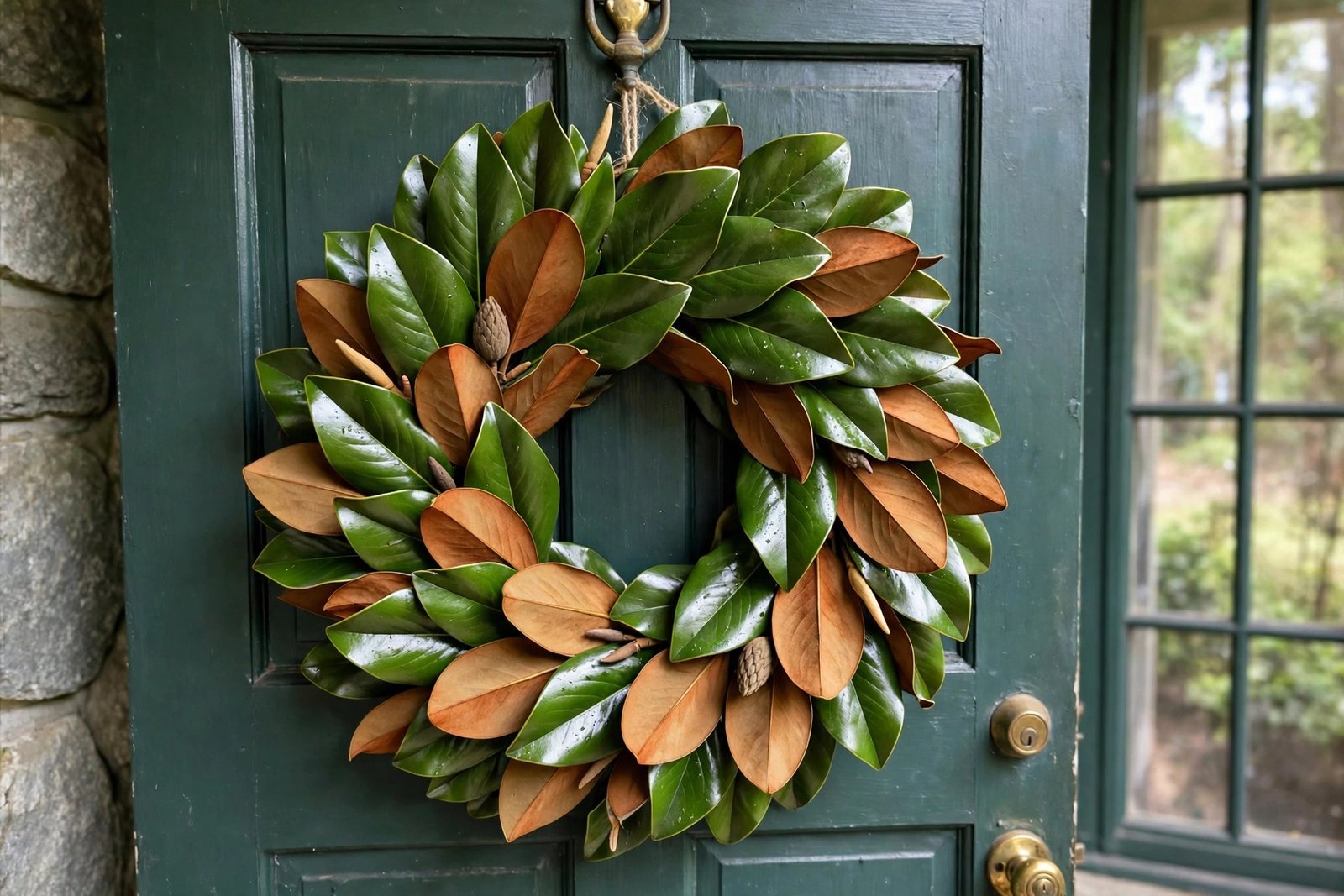
Magnolia leaves make a wreath with a polished, almost lacquered surface, and their brown undersides add depth. Gather fresh magnolia leaves — or buy a bunch from the florist — and wire them in overlapping rows onto a wire frame, green side up, so each row covers the last one’s stems. Turn a few leaves over to show the velvety brown underside, spaced evenly for contrast. The ring suits a dark green or black door, where the gloss catches the light. Mist the leaves lightly once a week to keep them supple, and replace any that curl at the edges with fresh ones from the bunch.
13. Fan Twigs into a Starburst Ring
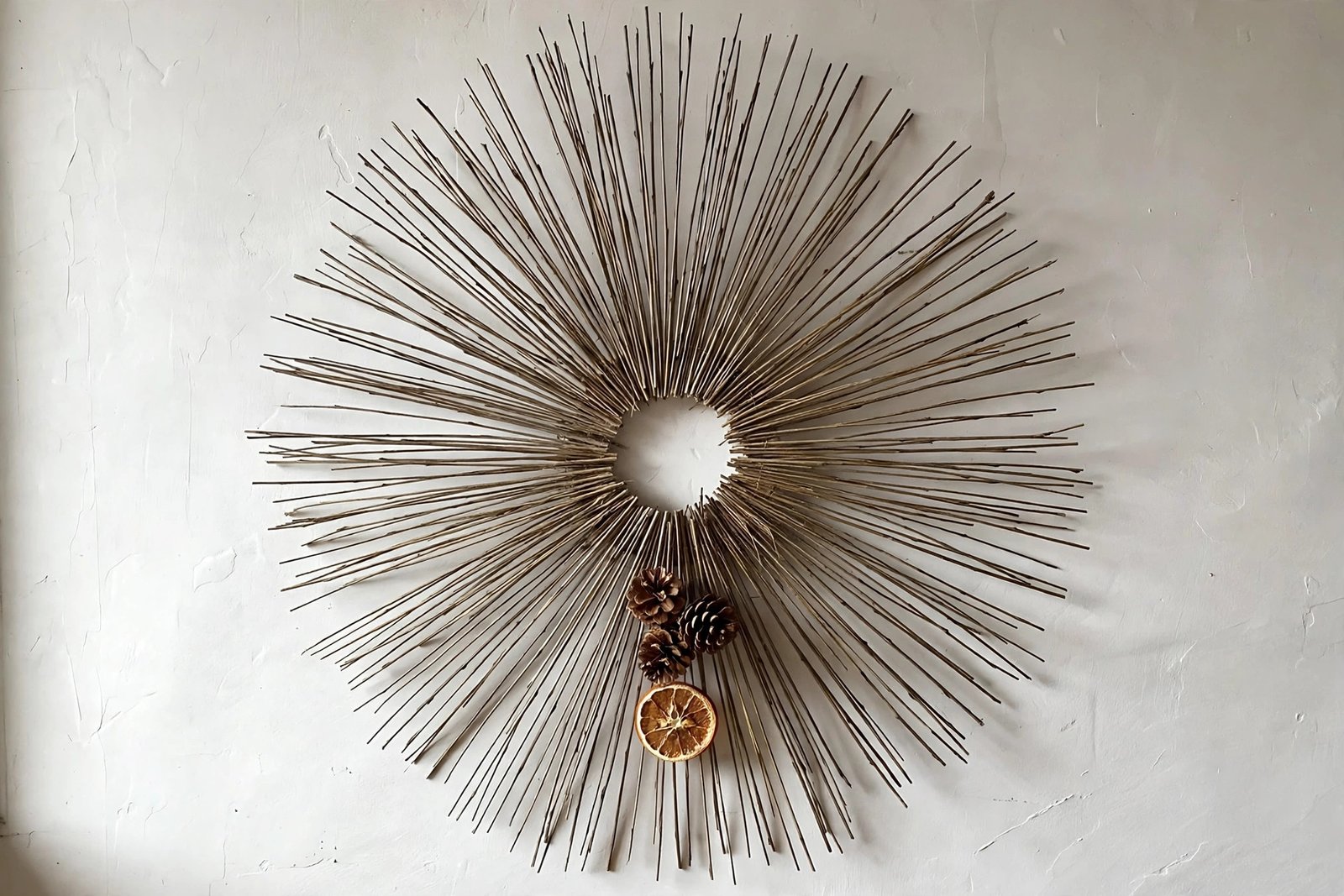
A starburst wreath trades the full green circle for a graphic ring of twigs, and it suits a modern wall better than any other wreath here. Cut thin, straight twigs to about 30 cm, bundle them in groups of five, and wire each bundle to a small wire ring so the twigs fan outward like rays. Add a few small pinecones and a dried orange slice at the bottom of the ring for a seasonal anchor, keeping the rest of the circle bare. The wreath needs a plain wall to breathe — white or pale grey shows the twig lines best. Hang it from a single nail, since the ring is light, and keep it indoors where damp cannot warp the twigs.
14. Hang a Trio of Mini Wreaths on the Windows

Three small wreaths beat one large one on a run of windows, because the repetition ties the room together. Make three matching mini wreaths, each about 25 cm across, on small wire frames with the same greenery — fir and cedar, a few red berries, a short length of twine for hanging. Hang one in the centre of each window on a suction hook, at the same height, so the row reads as a set. The trio suits a living room or dining room with two or three windows in a row, where one large wreath would look lost. Keep the berries and greenery identical across all three, since a single odd one breaks the rhythm.
15. Set an Advent Candle Wreath on the Table

An Advent wreath moves the idea from the door to the table, and four candles give it a purpose through December. Lay a flat ring of fir and cedar on a shallow tray, then set four candles in brass holders evenly around the ring — three in a deep tone and one in cream, or all four in the same colour. Tuck pinecones and a few dried orange slices between the candles, and keep the greenery clear of the flames. The wreath suits the centre of a dining table or a sideboard, where it can be lit at dinner. Never leave the candles burning unattended, and trim the wicks short so the flames stay small and steady.
A handmade wreath changes a house before the door even opens, and each of these 15 takes nothing more than a base, a few honest materials and an hour at the table. Start with the fresh greenery ring for the front door, then make a second for a window or a wall, and let the Christmas entryway carry the welcome inside. The best wreath is the one that gets made, hung, and then made again next year a little differently.