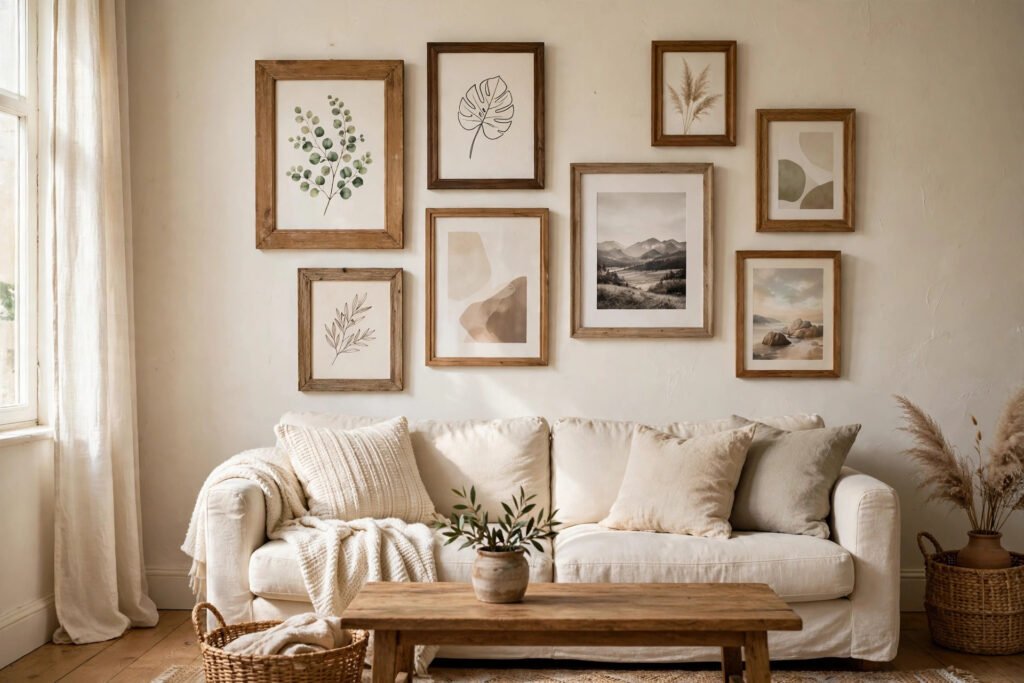
Renter friendly wall decor starts with one simple rule: nothing that leaves a mark behind. Rented walls can still carry art, colour and texture, and every idea below comes off cleanly on moving day, with no drill, no filler and no awkward conversation with the landlord. The trick is matching the fixing to the weight, and choosing pieces that look intentional rather than temporary.
A rented home does not have to look rented. Leaning art, adhesive strips, tension rods and peel-and-stick finishes do the same visual work as nails and screws, and most of them move to the next home in the same box they arrived in. The fifteen ideas below work room by room, from the wall above the sofa to a narrow hallway that barely fits a bench, and each one names the fixing, the weight it holds and the room it suits best.
15 Renter Friendly Wall Decor Ideas for Every Rented Home
1. Build a Gallery Wall with Adhesive Strips
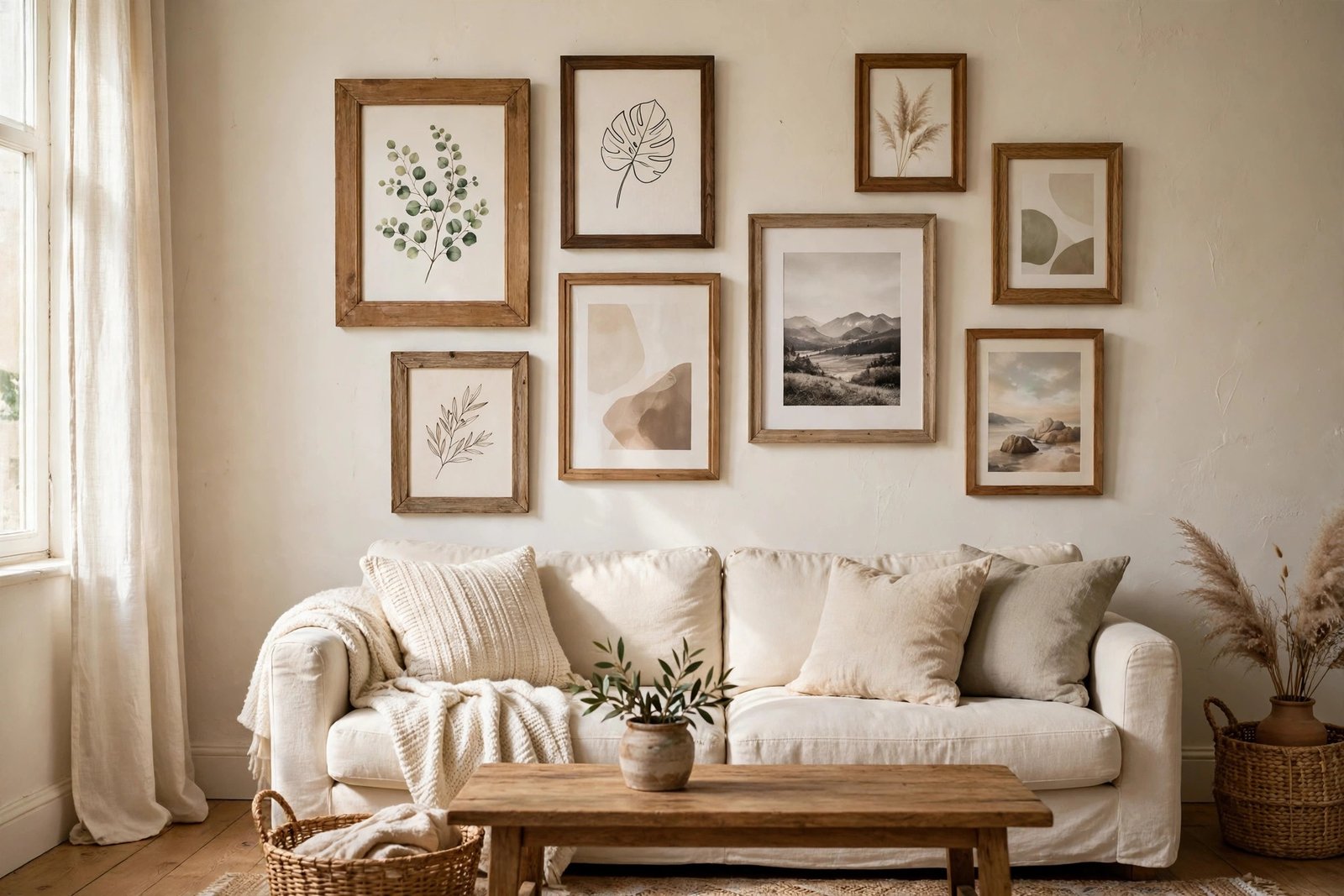
A gallery wall hung on adhesive strips looks exactly like a nailed one, and it peels off without a trace. Lay the frames on the floor first, move them until the mix feels balanced, then trace each frame on paper and tape the paper to the wall as a placement guide. Weigh every frame on a kitchen scale and match the strip rating to the real weight — a frame up to 60 by 90 centimetres needs four pairs of large strips. Press each strip firmly for thirty seconds, wait an hour before hanging the frame, and keep the centre of the arrangement at eye level, about 145 to 150 centimetres from the floor. This is the best starting point for a living room wall, and it suits mixed prints, family photographs and postcards in one repeated frame colour.
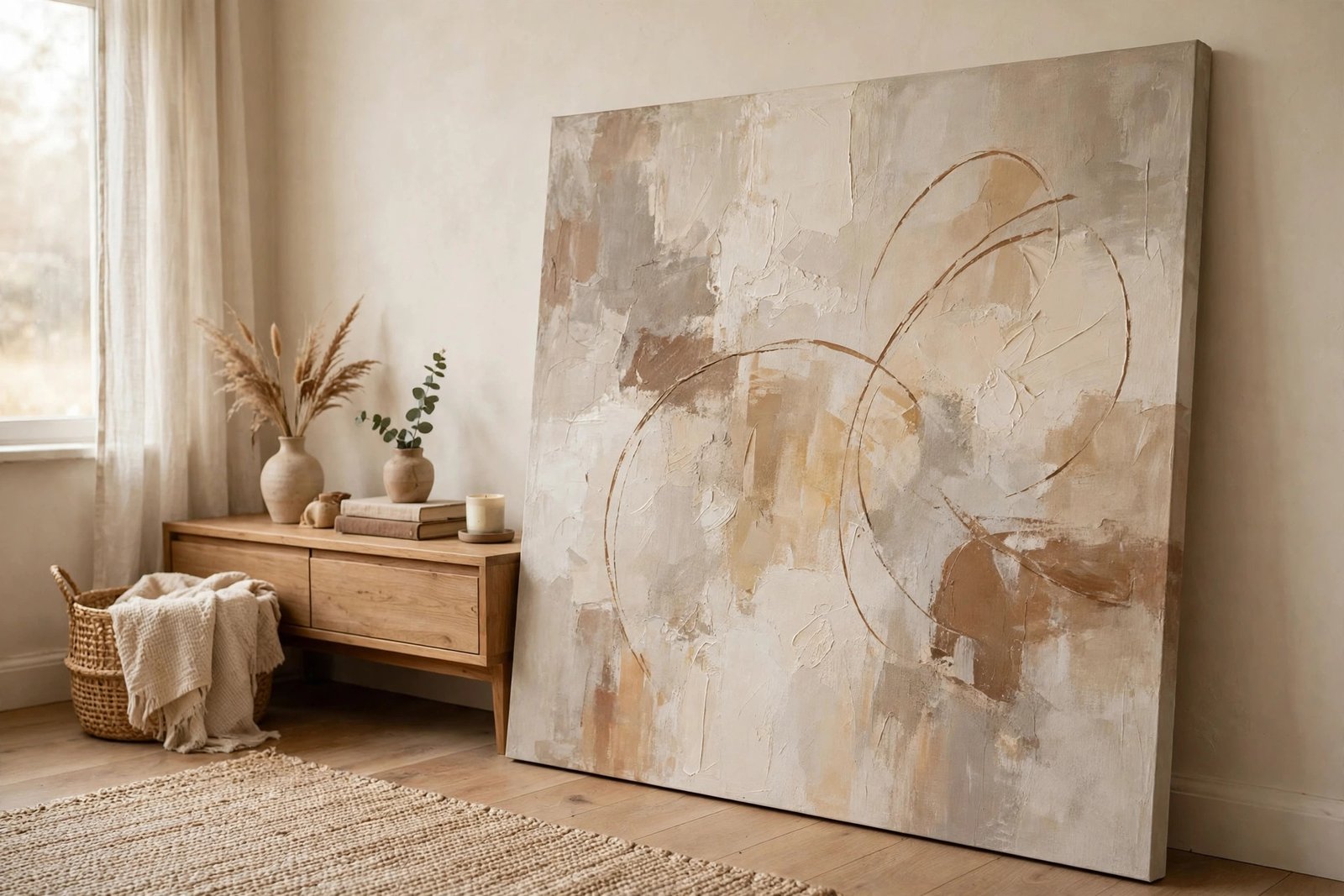
2. Lean One Oversized Canvas on the Floor
The simplest no-drill trick of all is to lean a large framed print or canvas against the wall. Rest it on the floor or on a low console, and it instantly fills a blank wall with colour and personality. A big piece looks deliberate and expensive, and it needs no fixings at all. Choose a canvas at least 90 centimetres wide for a living room, or a tall portrait shape for a narrow bedroom wall, and leave a small gap behind the top edge so it sits at a slight angle. A felt pad on the bottom corners protects the skirting board, and the piece moves in seconds when the furniture is rearranged. This suits renters who redecorate often, since the art changes rooms without a single new hole.
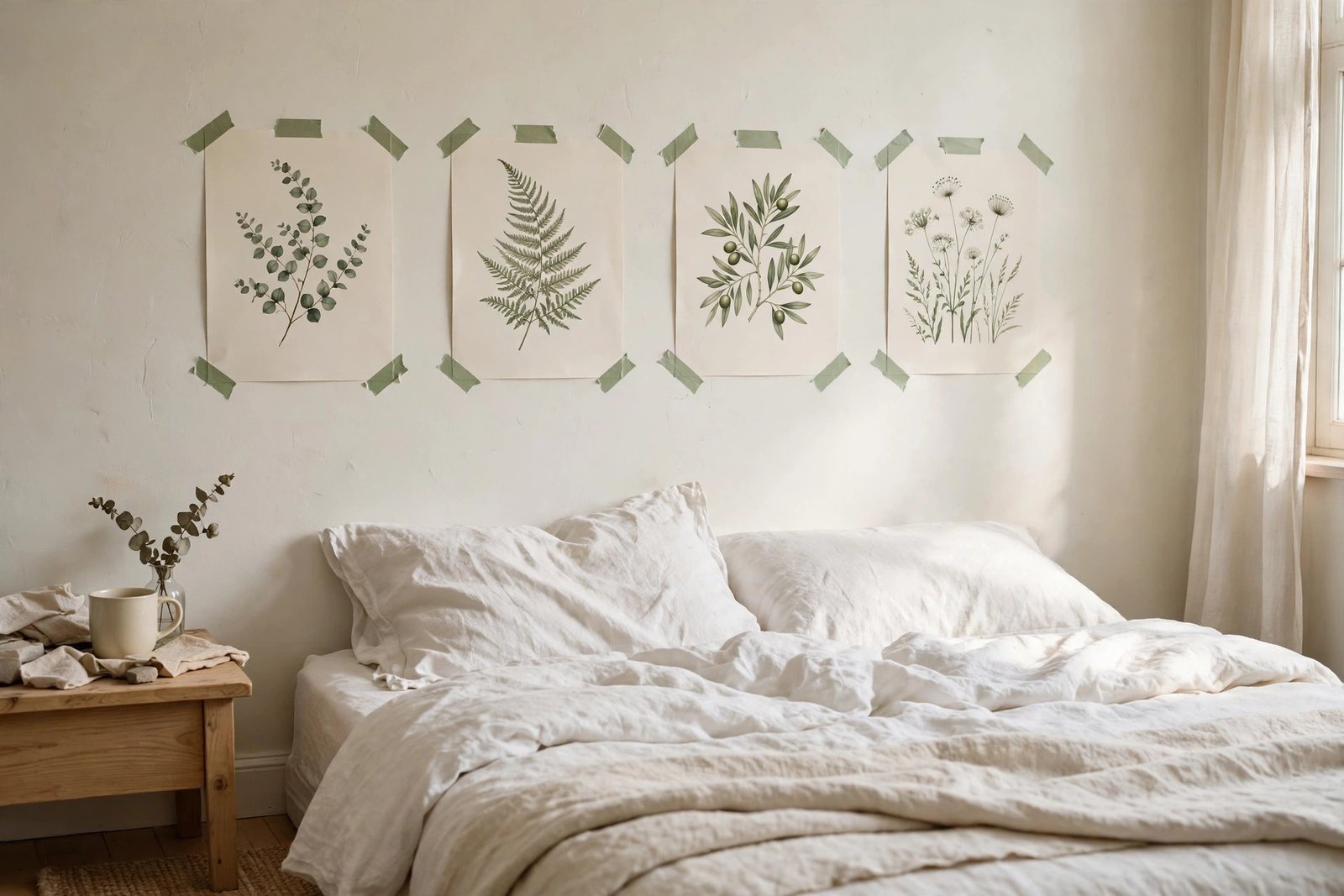
3. Tape Unframed Prints with Washi Tape
Washi tape turns plain prints into wall art with no frame and no holes. Choose a tape colour that matches the print or the room — sage green on cream walls, warm terracotta on white — and tape all four corners, or frame the whole print with a tape border for a graphic, poster-like edge. Use washi tape, not masking tape: washi is designed to remove cleanly, while masking tape can pull paint off after a few weeks. Unframed prints suit a bedroom wall, a study corner or a hallway, and the display changes in minutes when a new print arrives. Keep prints out of direct sun so the paper does not fade, and replace the tape every few months if the room runs humid.
4. Paper One Accent Wall with Peel-and-Stick Wallpaper
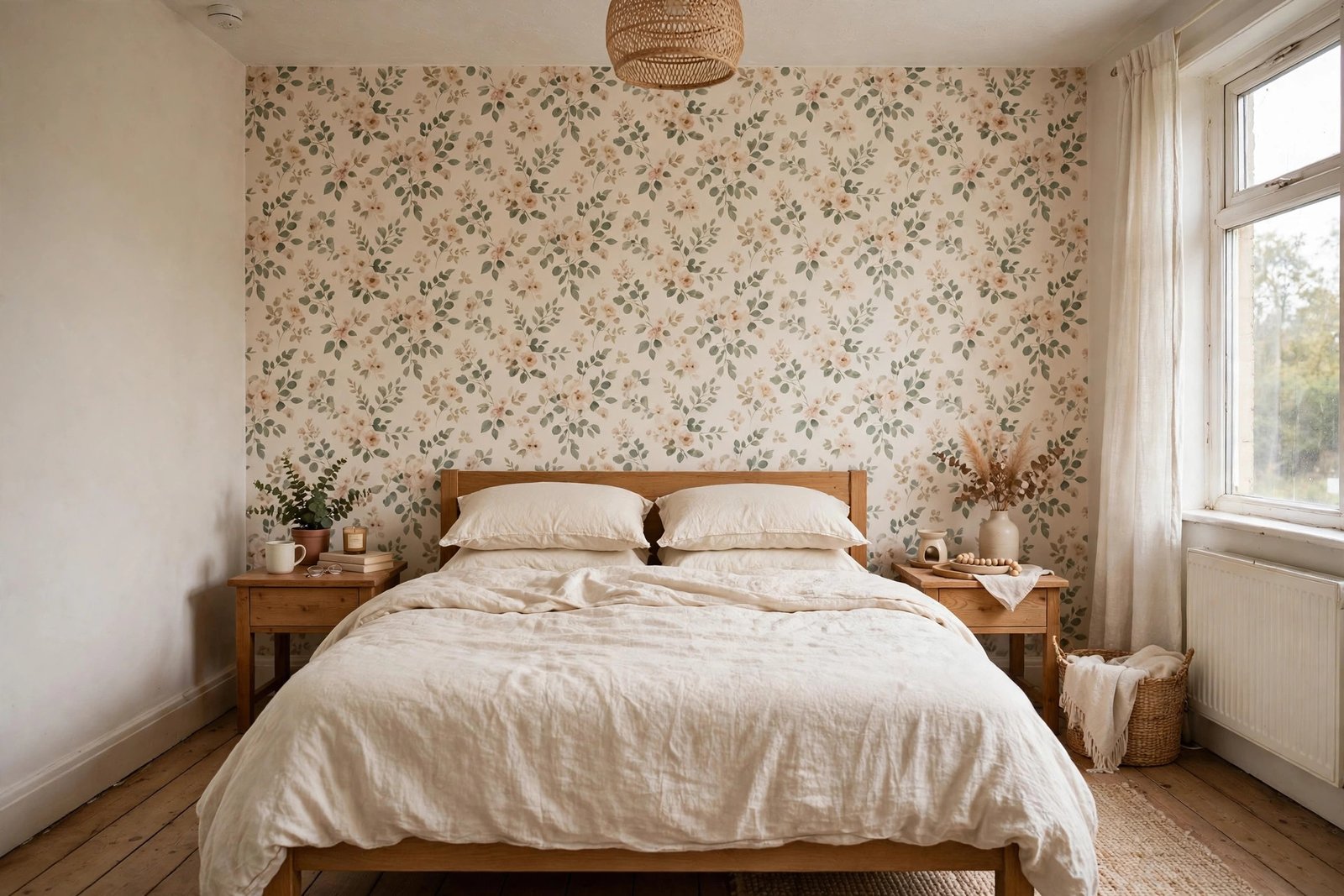
Peel-and-stick wallpaper is the single biggest transformation a renter can make, and it peels off cleanly when the lease ends. Paper one wall only — behind the bed, behind the sofa, or the wall a dining table faces — so the pattern reads as a feature, not a takeover. Soft florals, gentle stripes and calm geometrics suit rented rooms best, and a light background keeps a small room feeling open. Order a sample first and test it in a hidden spot for two days, since some adhesives can lift paint on freshly painted walls. Apply in 30-centimetre sections with a plastic smoother, working from the centre outward to push out bubbles, and trim the edges with a sharp blade for a clean line. This is the idea for a plain white rental that needs warmth fast.
5. Drape a Fabric Wall Hanging from a Tension Rod
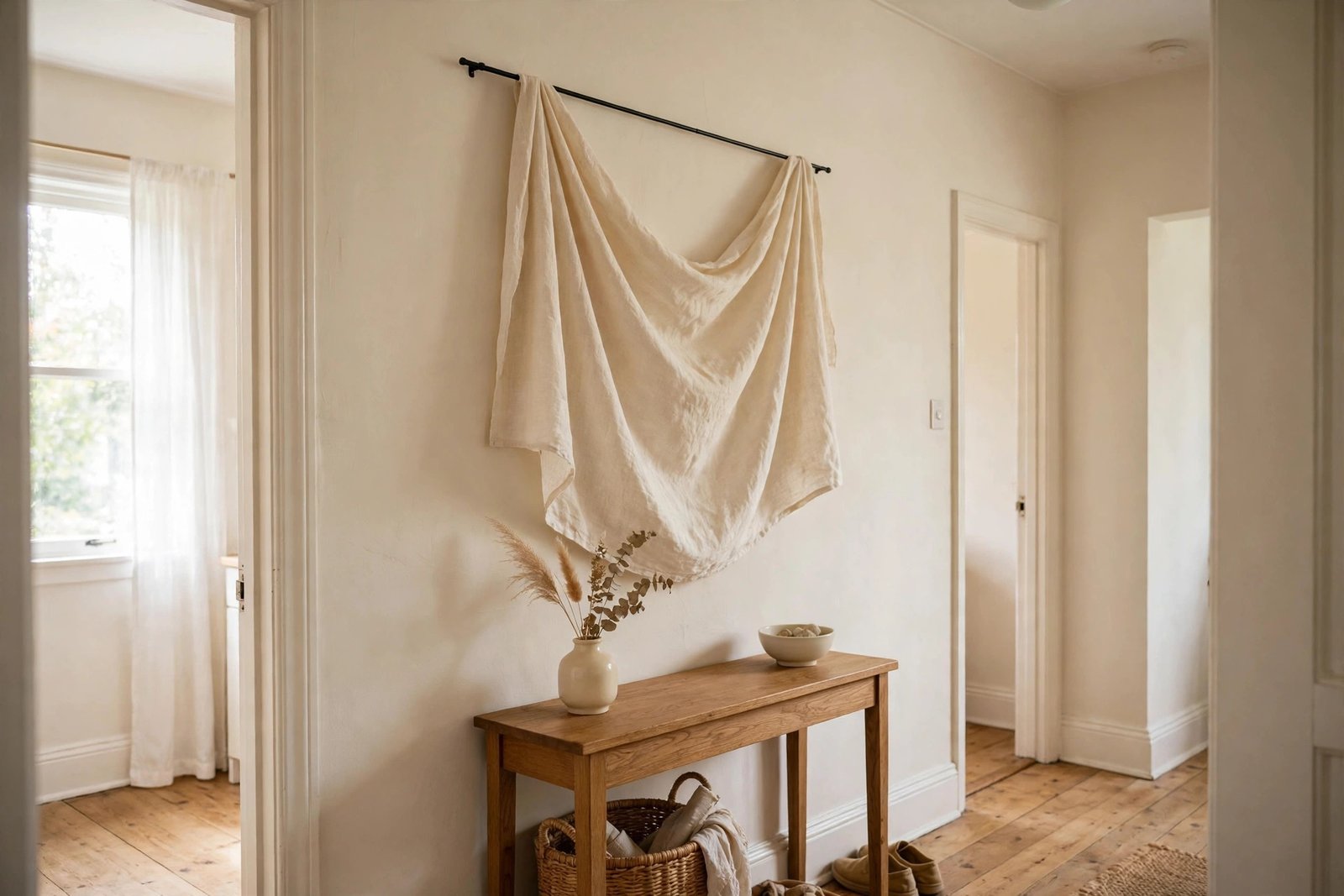
A fabric wall hanging brings instant softness to a bare wall, and a tension rod holds it without a single hole. Wedge the rod between two walls in a hallway or alcove, or mount it inside a window recess, then clip the fabric to the rod with curtain rings. Linen, cotton and lightweight wool all drape well; a heavier weave needs a wider rod so it does not sag in the middle. The hanging suits a bedroom wall behind the bed, where it softens the headboard area, and it comes down in seconds on moving day. Choose a print with the room’s accent colour in it, and keep the bottom edge clear of radiators and skirting heaters.
6. Lean a Tall Arched Mirror in the Corner
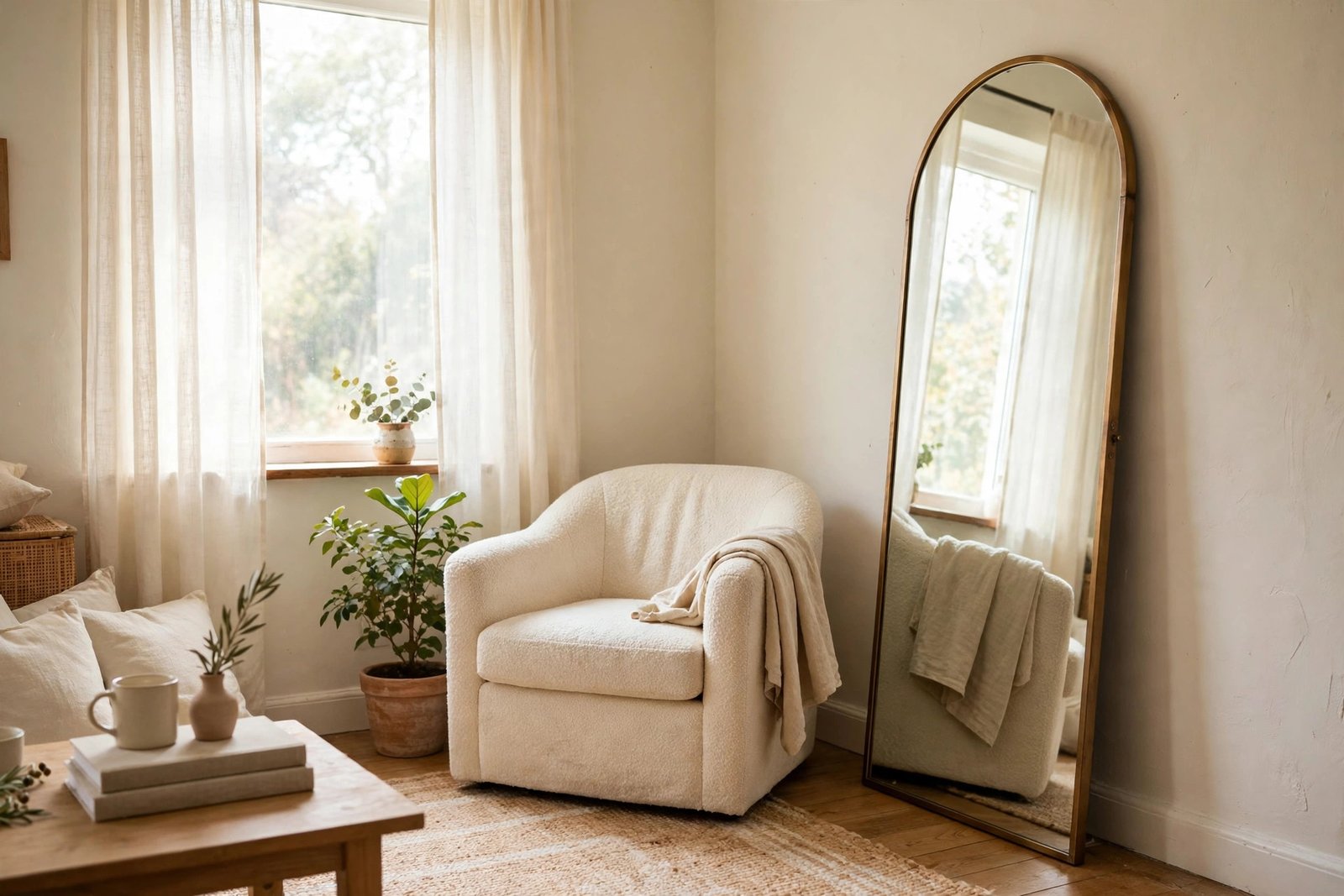
A tall arched mirror leaning in a corner bounces light around the room and makes a small rental feel bigger at once. No wall contact is needed: the mirror rests on the floor at a slight angle, with a felt pad behind the top edge and a non-slip mat underneath. Choose a frame at least 40 by 150 centimetres so the reflection shows the whole room, and place it opposite a window to catch the most daylight. An arched top softens a boxy rented room, while a slim black or brass frame keeps the look calm. This suits a bedroom corner, a hallway end or the empty wall beside a sofa, and it moves to the next home without a trace.
7. Rest a Picture Ledge on a Console Table
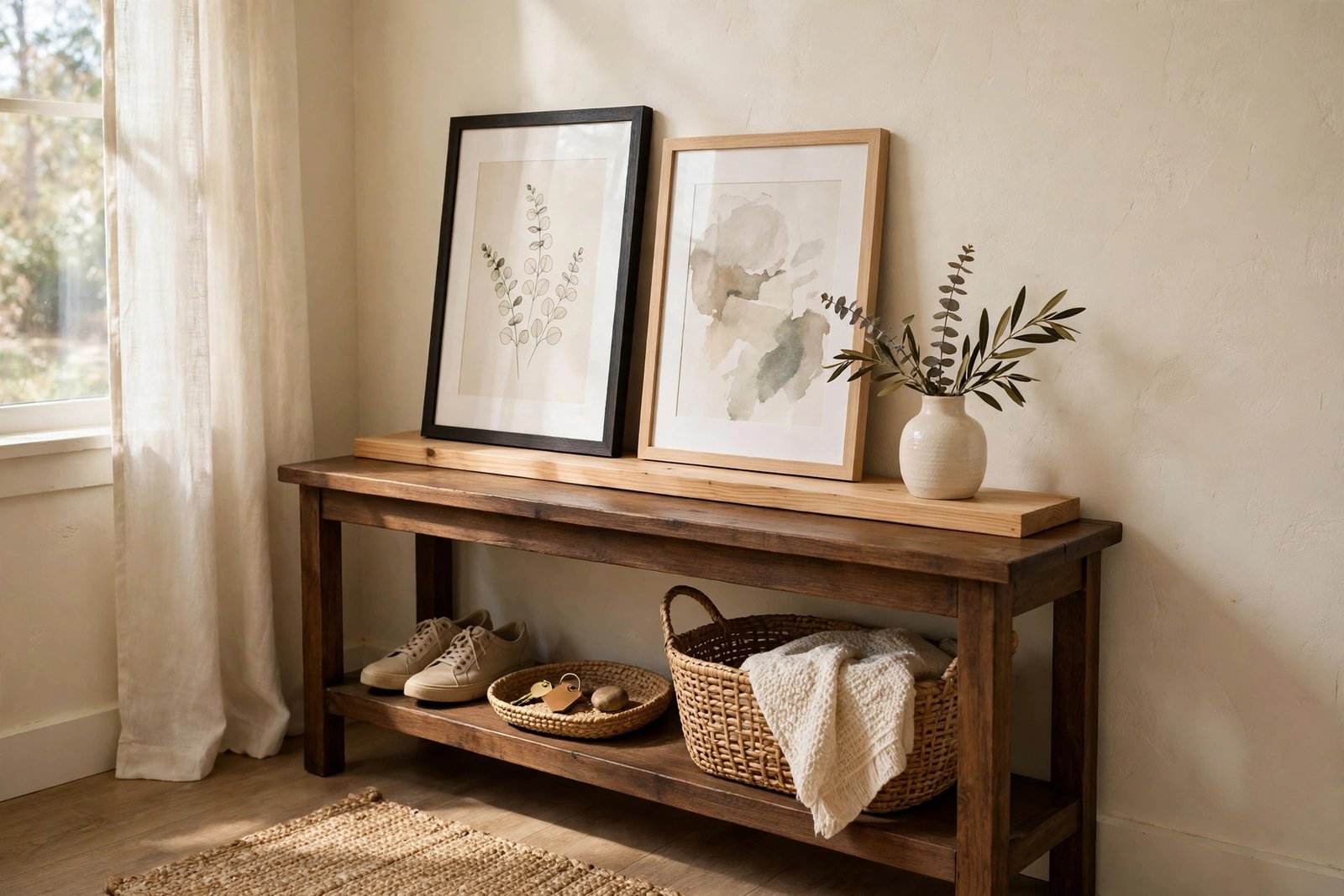
A narrow picture ledge does not have to be screwed to the wall. Rest one on a console table, a sideboard or a chest of drawers, and lean framed prints against the wall behind it. The ledge holds the frames upright, stops them sliding forward, and lets the display change in seconds — swap a print, add a small vase, move a candle along. Keep the frames to two sizes at most so the row reads as one composition, and place the tallest frame at one end for a gentle slope. This suits an entryway console, a living room sideboard or a bedroom dresser, and it works on any wall, smooth or textured, because nothing touches the plaster at all.
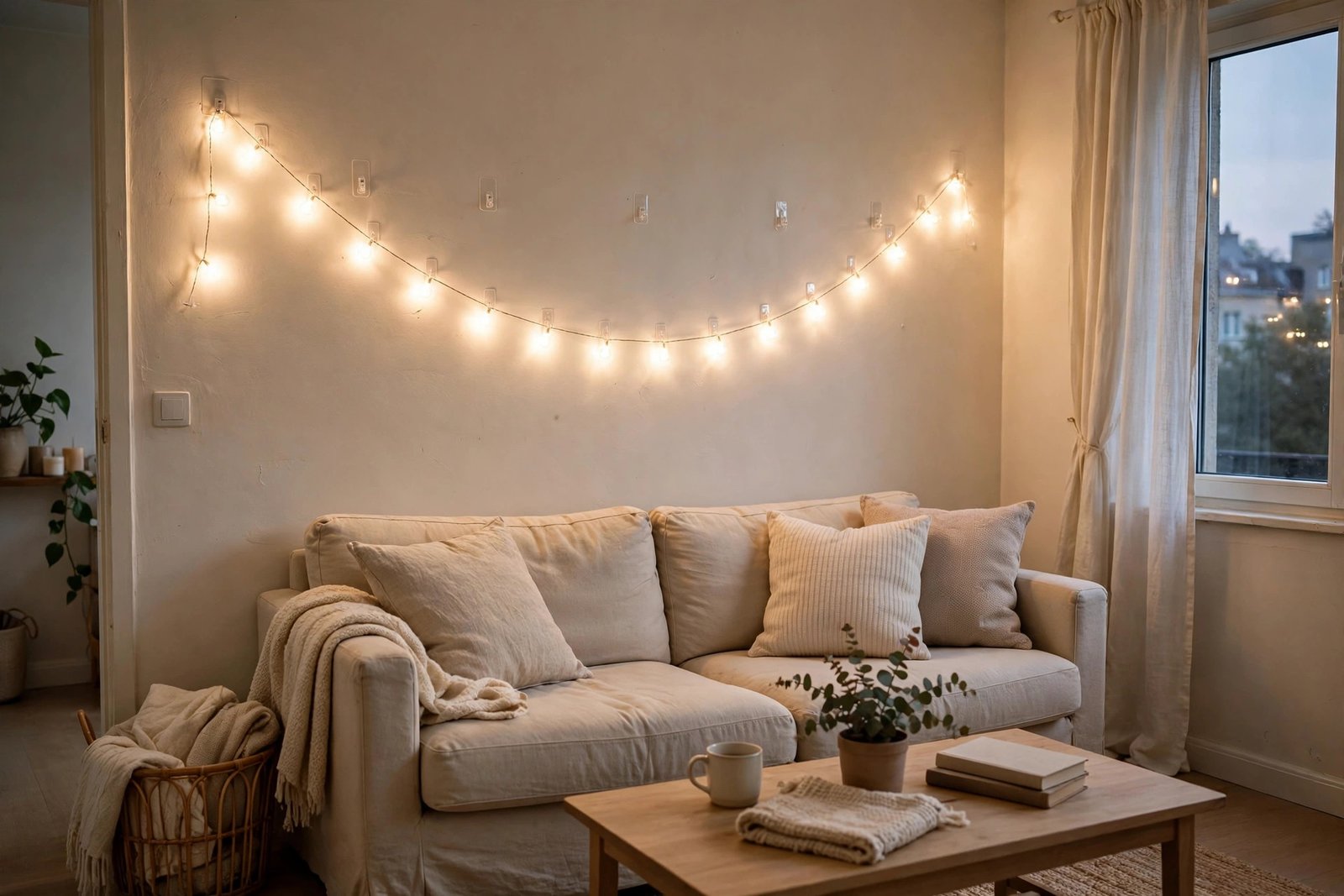
8. Drape String Lights from Adhesive Hooks
Warm string lights turn a plain wall into a soft, glowing feature, and small adhesive hooks hold them with no drilling. Space clear hooks about 30 centimetres apart along the line the lights will follow — a gentle drape above the sofa, a frame around a bedroom window, or a zigzag across a reading corner. Choose warm white bulbs, around 2700K, for a cosy evening glow, and run the cable to a nearby socket with a cord cover painted to match the wall. Battery-operated sets suit walls far from a socket, and a timer plug switches them off automatically. Keep the hooks clear of steam and direct heat, and pull the removal tab straight down slowly when moving out.
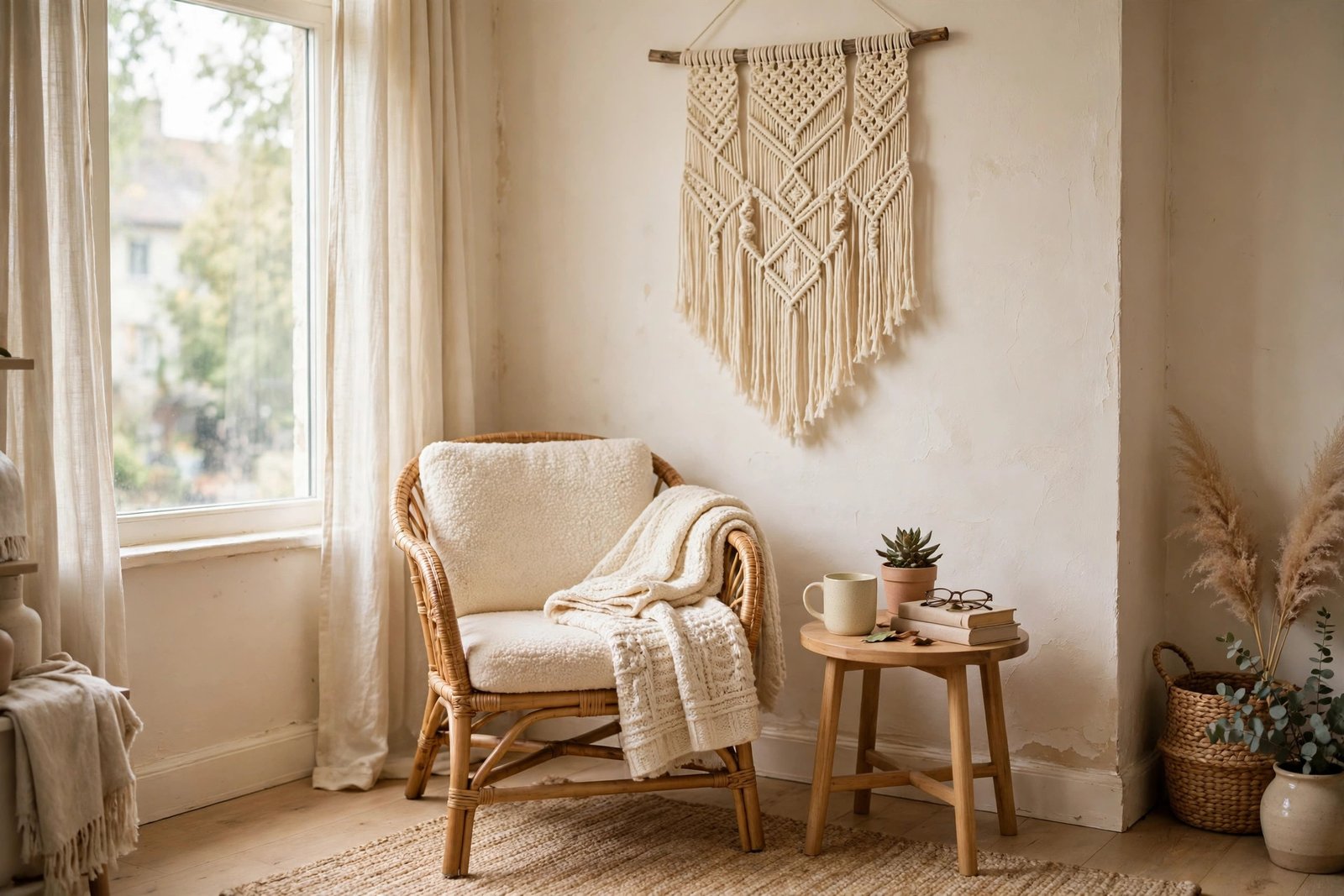
9. Hang a Macramé Piece on a Single Adhesive Hook
A macramé wall hanging adds texture and handmade warmth to a wall, and one strong adhesive hook is all it needs. Macramé is light — most pieces weigh under a kilogram — so a single large hook rated for the weight holds it easily. Hang it above a reading chair, beside the bed, or on the narrow wall next to a door where a frame would feel cramped. Cream cotton cord suits warm neutral rooms, while a natural jute piece warms a cool white rental. Dust it with a soft brush every few weeks, and keep it away from damp bathroom walls, where the cord can hold moisture. The hook comes off cleanly with its pull tab, and the macramé rolls up for the move.
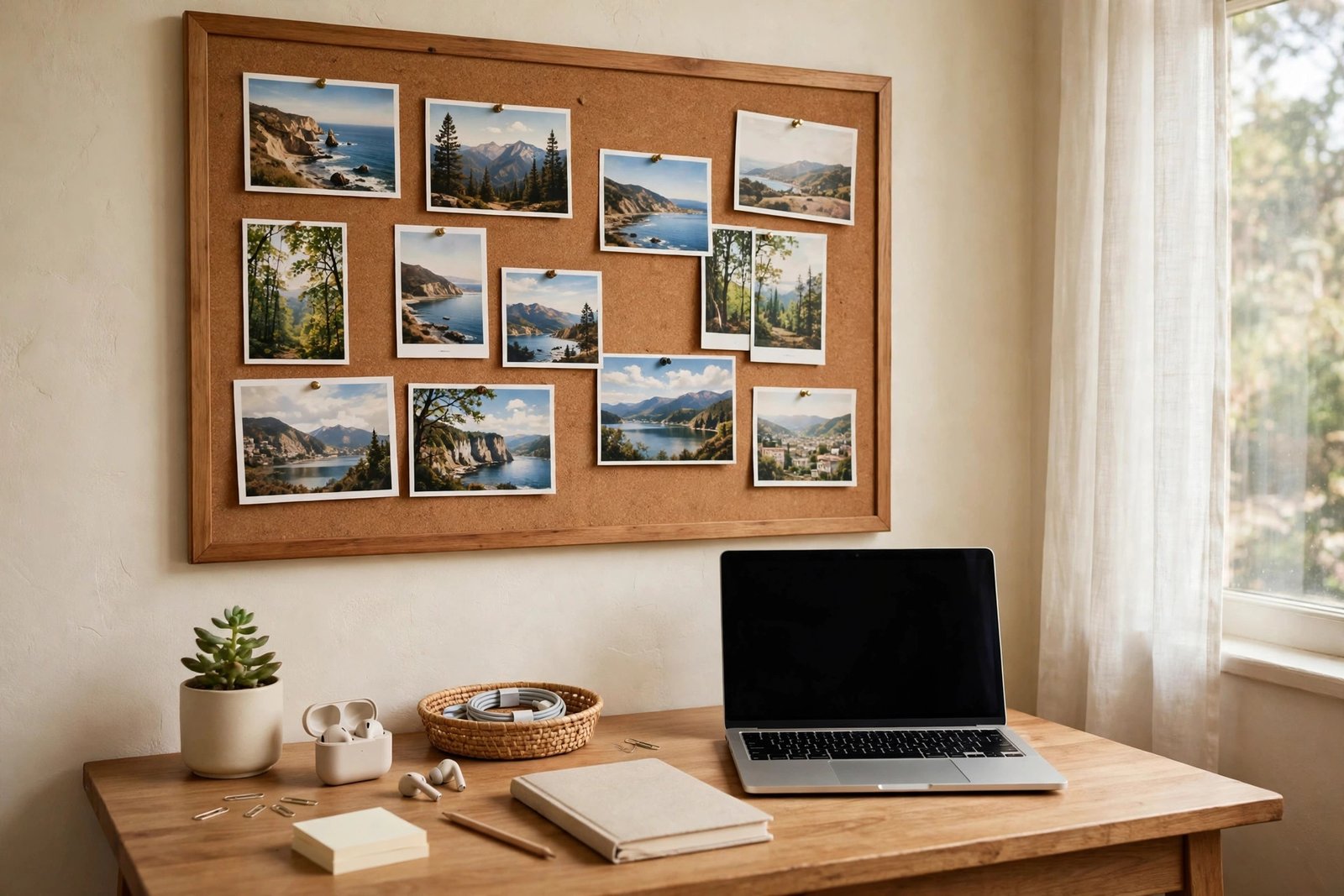
10. Pin a Corkboard Gallery with Adhesive Strips
A corkboard turns a wall into a gallery that changes weekly, and adhesive strips hold it without nails. Fix a framed corkboard above a desk, in a hallway or beside the kitchen door, and pin up photographs, postcards, ticket stubs, dried flowers and small notes. The board suits a home office best, where it keeps inspiration and reminders in sight, and it works in a bedroom too, as a soft, personal display above a dresser. Choose a board with a slim wooden frame so it reads as decor rather than office equipment, and use short pins so nothing pokes through the back. Rearrange the pins whenever the mood changes — the board itself never moves.
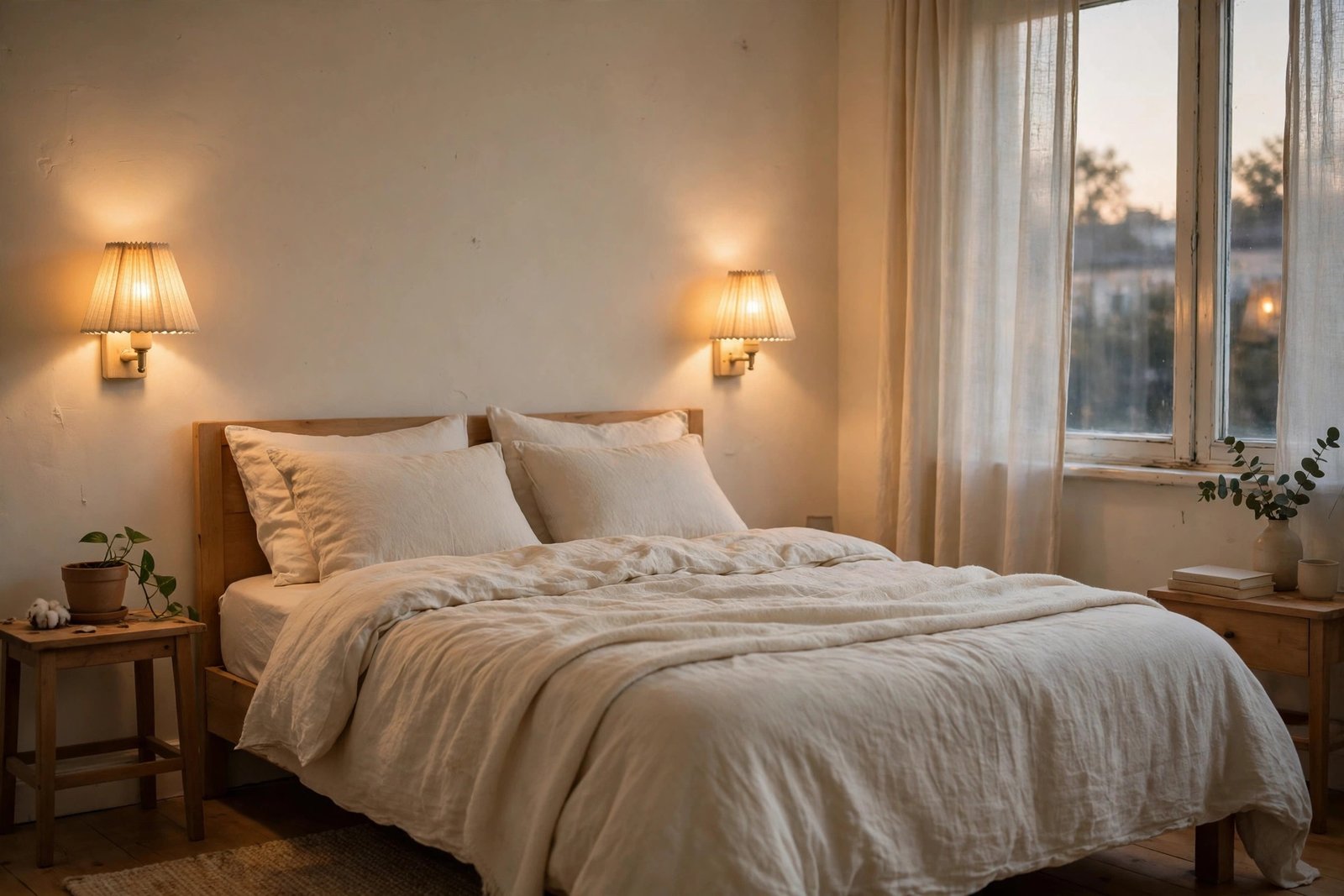
11. Plug In Battery Sconces Beside the Bed
Plug-in and battery sconces add a warm glow by the bed or sofa without any hardwiring. Mount them with adhesive strips or a single adhesive hook, run the cord down the wall inside a slim cord cover painted to match the paint, and plug in at the nearest socket. Battery versions suit walls far from a socket and switch on with a remote or a tap. A pleated or linen shade softens the light, and a pair mounted at the same height — about 140 centimetres from the floor — frames the bed like built-in reading lights. This is the idea for a rented bedroom where the ceiling light is too harsh and the landlord will not allow new wiring.
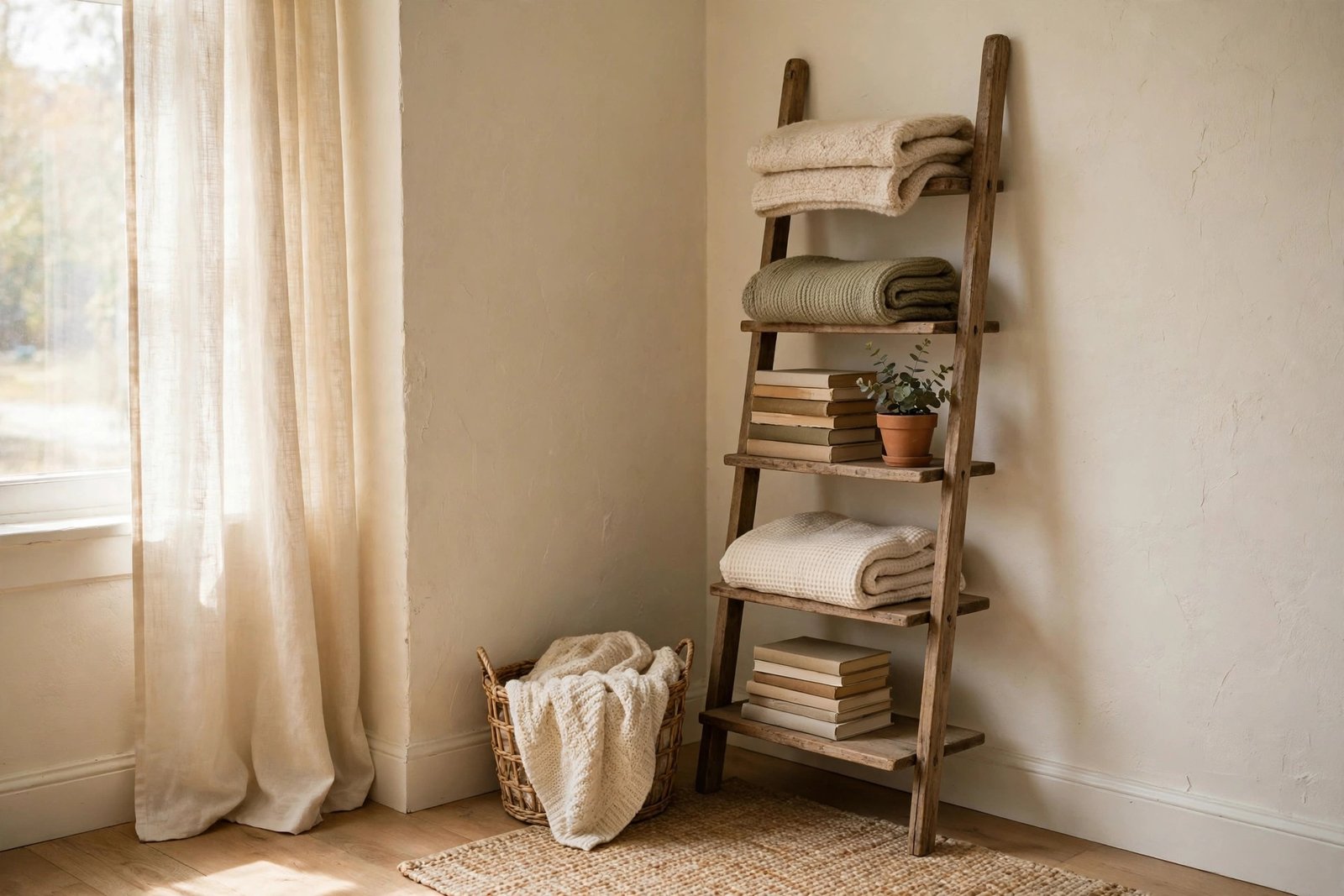
12. Lean a Ladder Shelf Against the Wall
A leaning ladder shelf rests on the floor and touches the wall only at the top, so it fills a blank wall with storage and display and leaves no marks. Style the rungs with folded throws, books, small plants and framed prints, keeping the heaviest items on the lowest rung for stability. The shelf suits a living room corner, a bedroom wall or a bathroom, where it holds towels and baskets, and it moves in one lift when the room is rearranged. Choose a wooden ladder in a warm oak or walnut finish for a cosy feel, and keep the top rung light so the shelf never tips forward. No screws, no brackets, no holes — the floor and a felt pad do all the work.
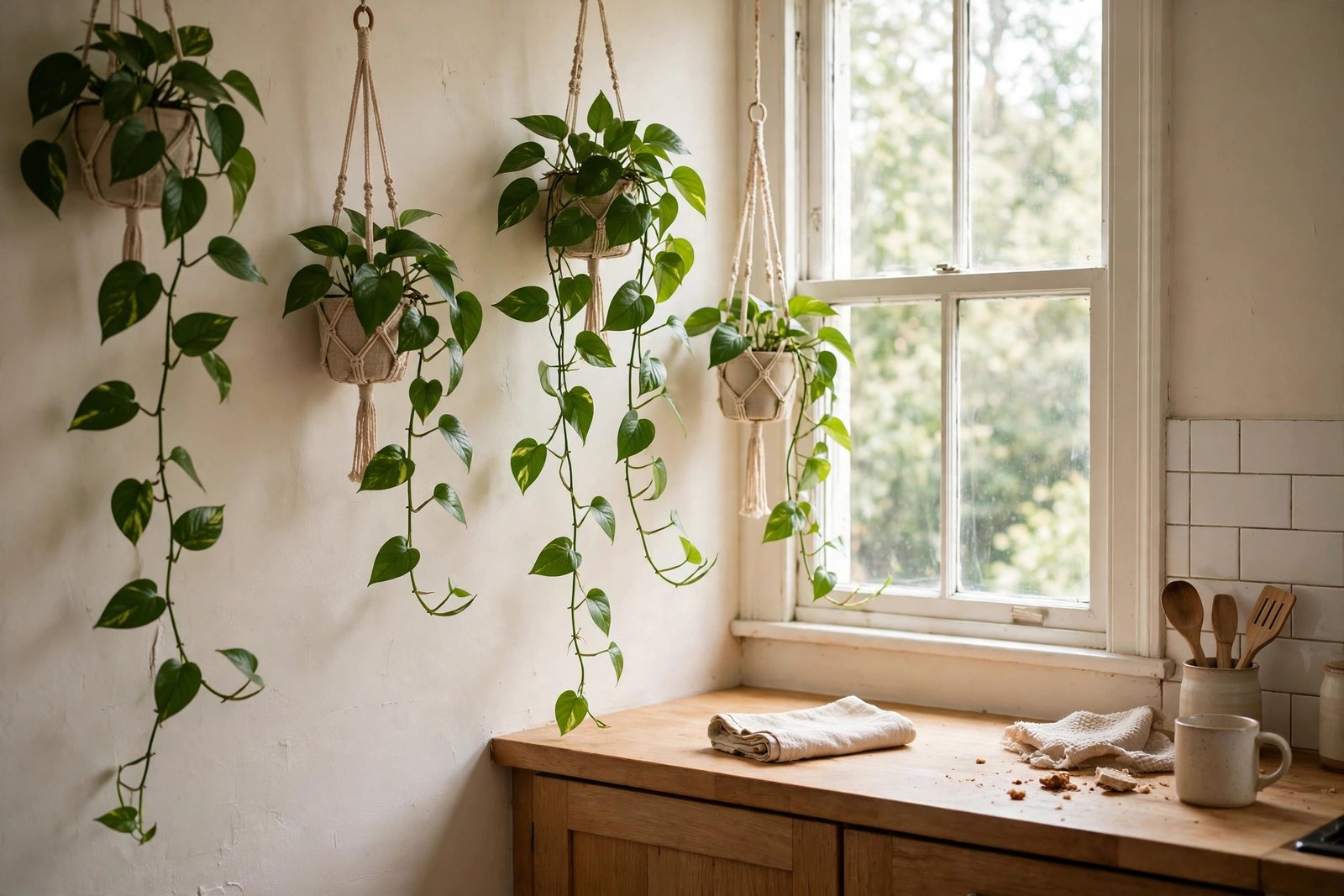
13. Hang Trailing Plants from Adhesive Ceiling Hooks
Trailing plants soften a bare wall from above, and adhesive ceiling hooks hold light hanging planters with no drilling. Choose a planter under a kilogram when watered — a small trailing pothos or string of pearls in a lightweight pot — and hang it beside a window where it catches daylight without blocking it. Two or three planters at different heights make a gentle green cascade, and a macramé hanger adds texture while keeping the pot secure. Water over the sink so drips never reach the floor, and check the hook rating after watering, since wet soil is heavier than dry. This suits a kitchen window, a bright living room corner or a bathroom with natural light.
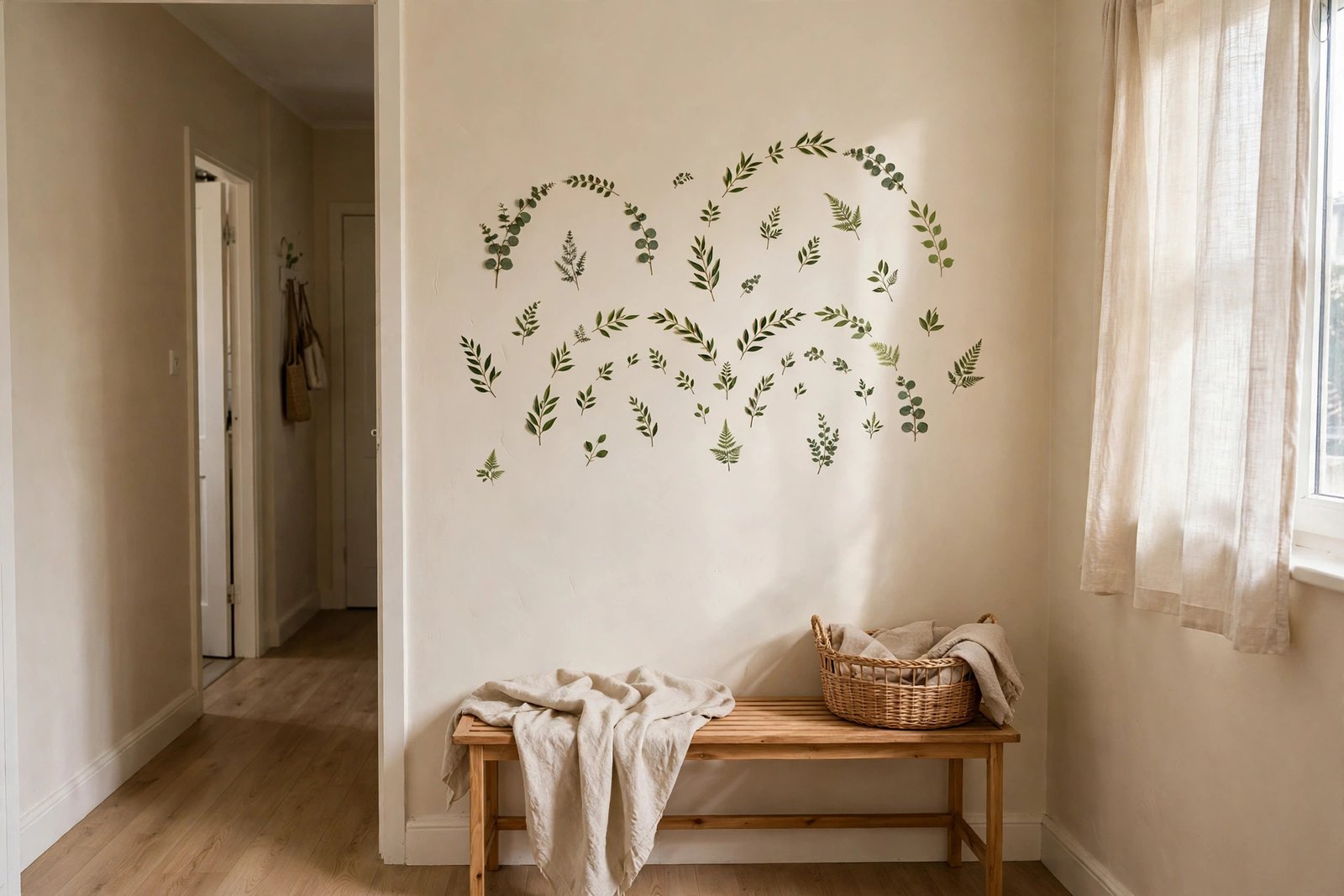
14. Dress a Narrow Wall with Removable Decals
Removable wall decals fill the narrow walls that frames cannot — the strip beside a door, the end of a hallway, the wall above a radiator cover. Botanical sprigs, simple arches and small birds suit rented homes best, and they peel off cleanly when the lease ends. Plan the layout on the floor first, then apply from the centre outward, smoothing each decal with a soft cloth so no air is trapped underneath. Keep decals clear of steam and direct heat, and test one in a hidden spot if the paint is fresh — paint needs at least thirty days to cure before any adhesive goes on it. This is the idea for a hallway that feels bare but has no room for furniture.
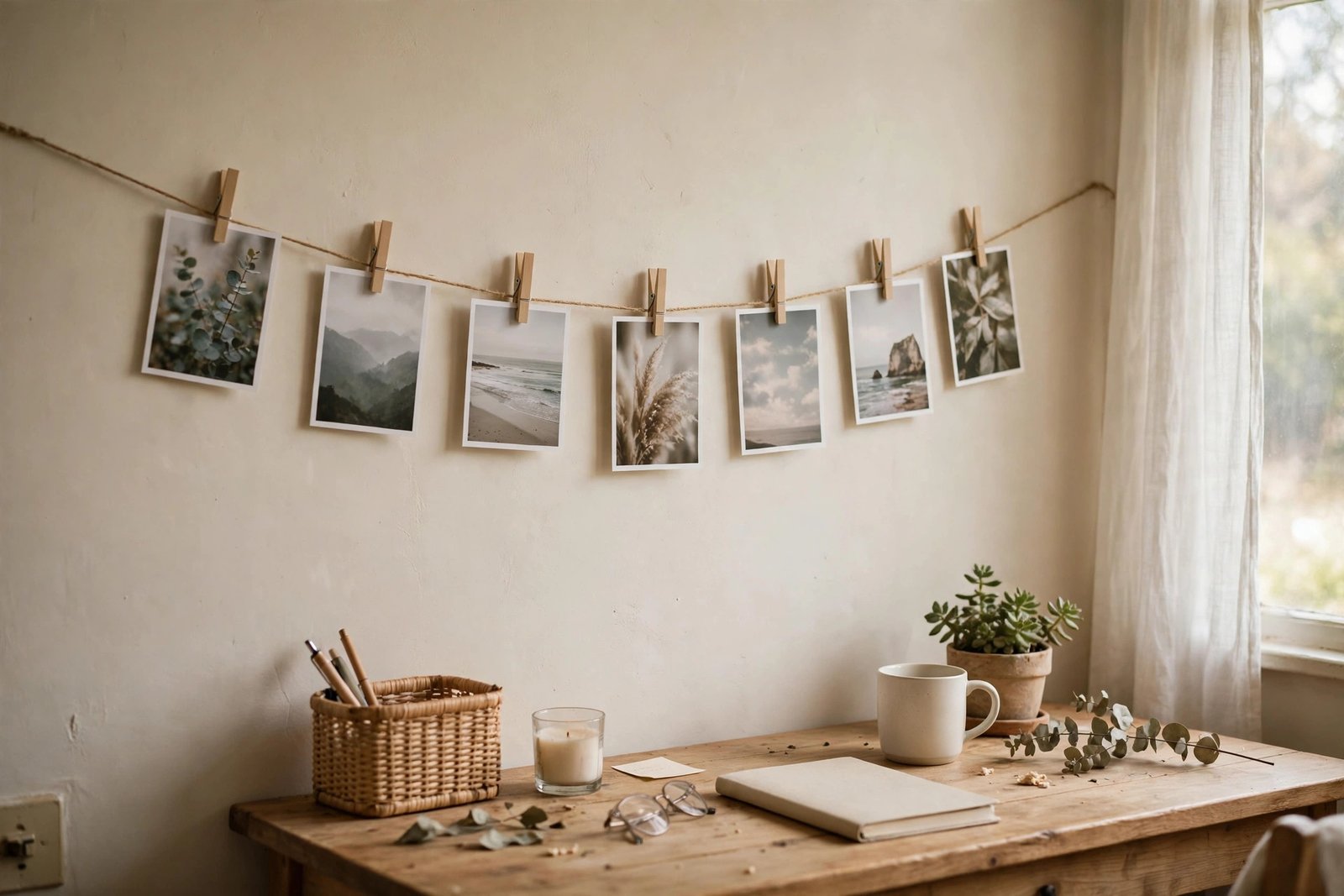
15. String a Rotating Photo Clip Line
A photo clip line turns a wall into a display that changes as often as the photographs do. Fix a length of twine, cord or slim wire between two adhesive hooks, then peg small prints along it with wooden clips. Mix family photographs, travel prints and postcards, and leave a little space between each one so the line reads as airy, not crowded. The line suits a bedroom wall, a study corner or the wall above a desk, and swapping a print takes seconds. Keep the total weight light — paper prints and wooden pegs only — and use two hooks for a line longer than a metre so the cord does not sag in the middle.
Rented walls do not have to stay bare, and none of these ideas asks the landlord for permission or the deposit for forgiveness. Start with the fixing, not the art: weigh the frame, check the strip rating, test any adhesive in a hidden spot, and photograph every wall on move-in day so there is proof of what was already there. Then hang, lean, drape and tape with confidence — and take it all down in an afternoon when the next home calls.