
Wall decor ideas turn a blank wall into the warmest part of a room. A bare wall makes even a well-furnished room feel unfinished, while one thoughtful treatment — plates, baskets, wood slats, or a painted arch — gives the whole space a focal point. The 15 ideas below cover every kind of wall, from a narrow hallway to a wide living room wall, and each one can be done in a weekend without a full remodel.
Most of the ideas use one material, one wall, and one afternoon of work. Together, they show how texture, shape, and a little height can make a room feel layered and complete.
Wall Decor Ideas for the Living Room, Bedroom, and Beyond
1. Build a Gallery Wall That Tells a Story
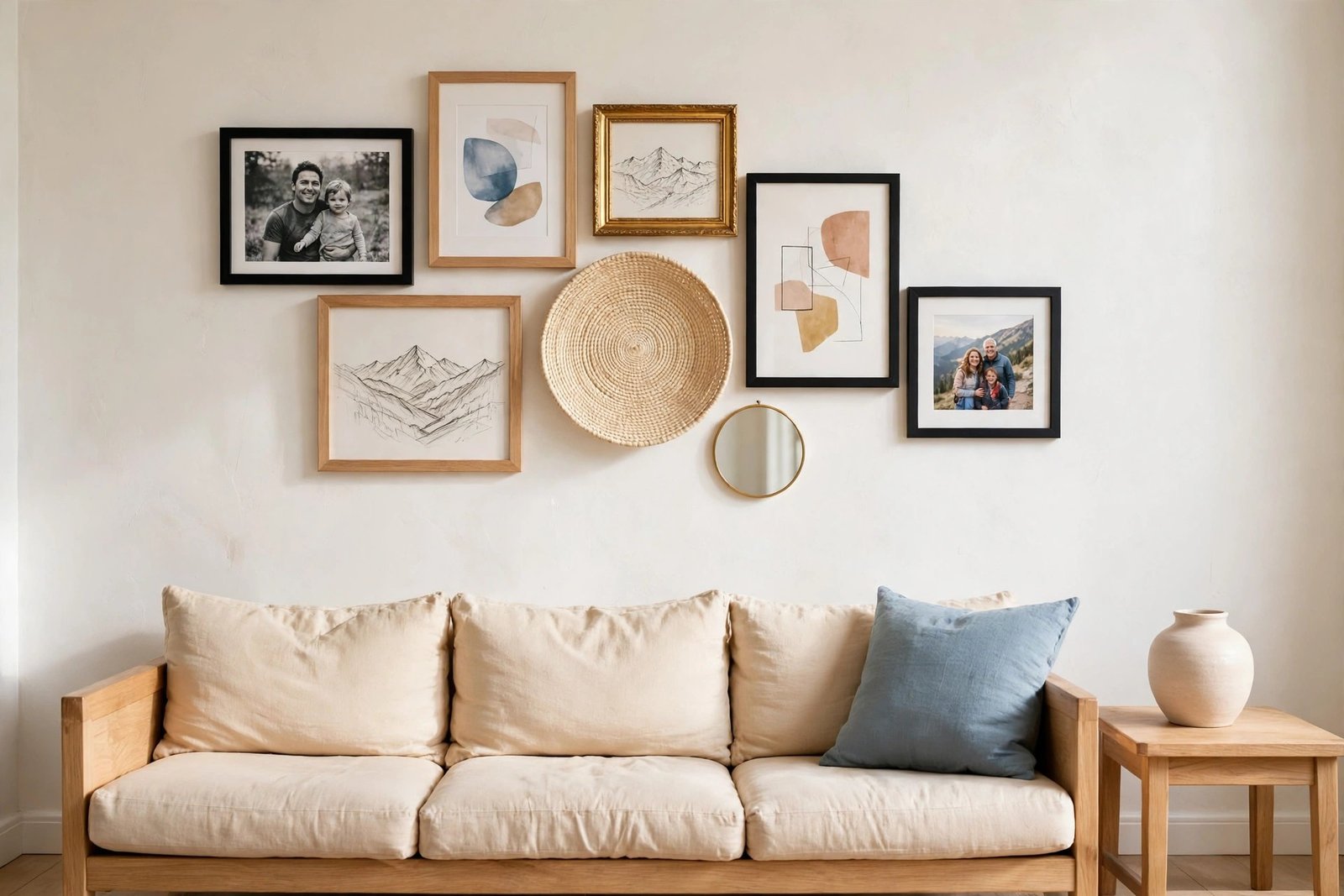
A gallery wall works best as a mix, not a matching set. Combine frame sizes and finishes — black metal, light oak, one gilt frame — with family photos, small art prints, and one flat object such as a woven disc or a small round mirror, arranged in a loose salon layout planned on the floor first. Matte frames with glare-free glass keep the wall calm in daylight. Start with the largest piece slightly off-center and build outward, keeping two to three inches between frames so the wall reads as one composition. This treatment suits a living room wall of any size, above a sofa or along a long hallway wall.
2. Hang a Plate Wall in the Dining Room
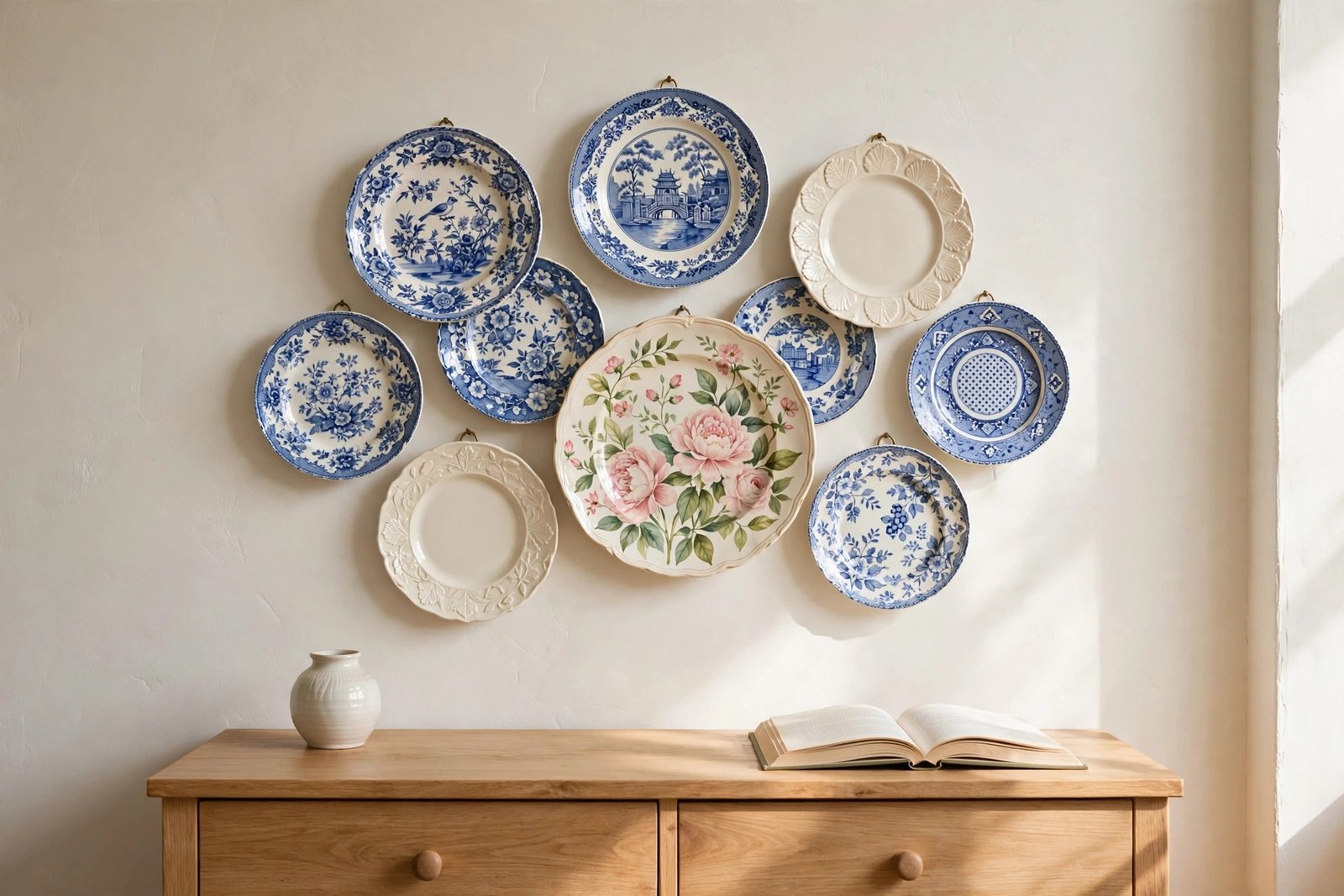
A plate wall turns a collection into art. Gather seven to eleven plates in mixed sizes and patterns — blue-and-white, cream ironstone, one hand-painted platter as the anchor — then trace each plate onto kraft paper, tape the templates to the wall, and stagger the arrangement so no two plates sit in a straight row. Glossy ceramic against matte plaster gives the wall a soft shine. Spring-style hangers hold best on the wall, and the largest platter goes up first, with the rest of the plates working outward from it. Hang the cluster above a sideboard or a dining table, where the plates catch the light at mealtimes.
3. Weave a Basket Wall Above the Sideboard
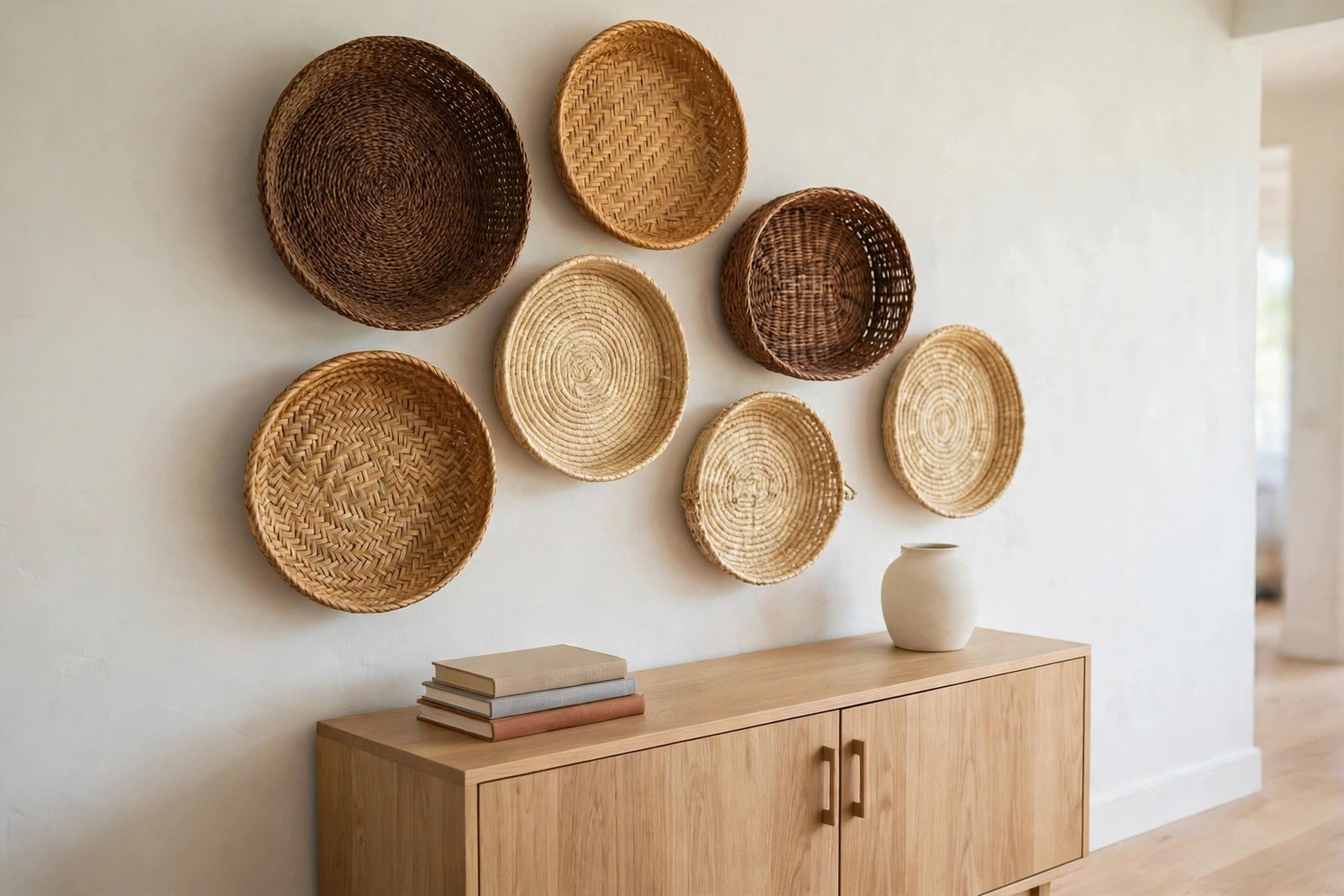
Woven baskets bring warmth and texture to a wall that paint alone cannot. Gather five to nine shallow baskets and trays in varied sizes, from eight to eighteen inches across, mixing pale straw, warm honey, and deep brown weaves, then hang them with small nails or adhesive hooks in an asymmetrical cluster. Natural seagrass and jute stay unsealed, so the fibers keep their soft, matte finish. Lay the baskets on the floor first and photograph the layout — the cluster should read wider than it is tall. A dining room or hallway wall above a sideboard suits this treatment best.
4. Run Vertical Wood Slats Up One Wall
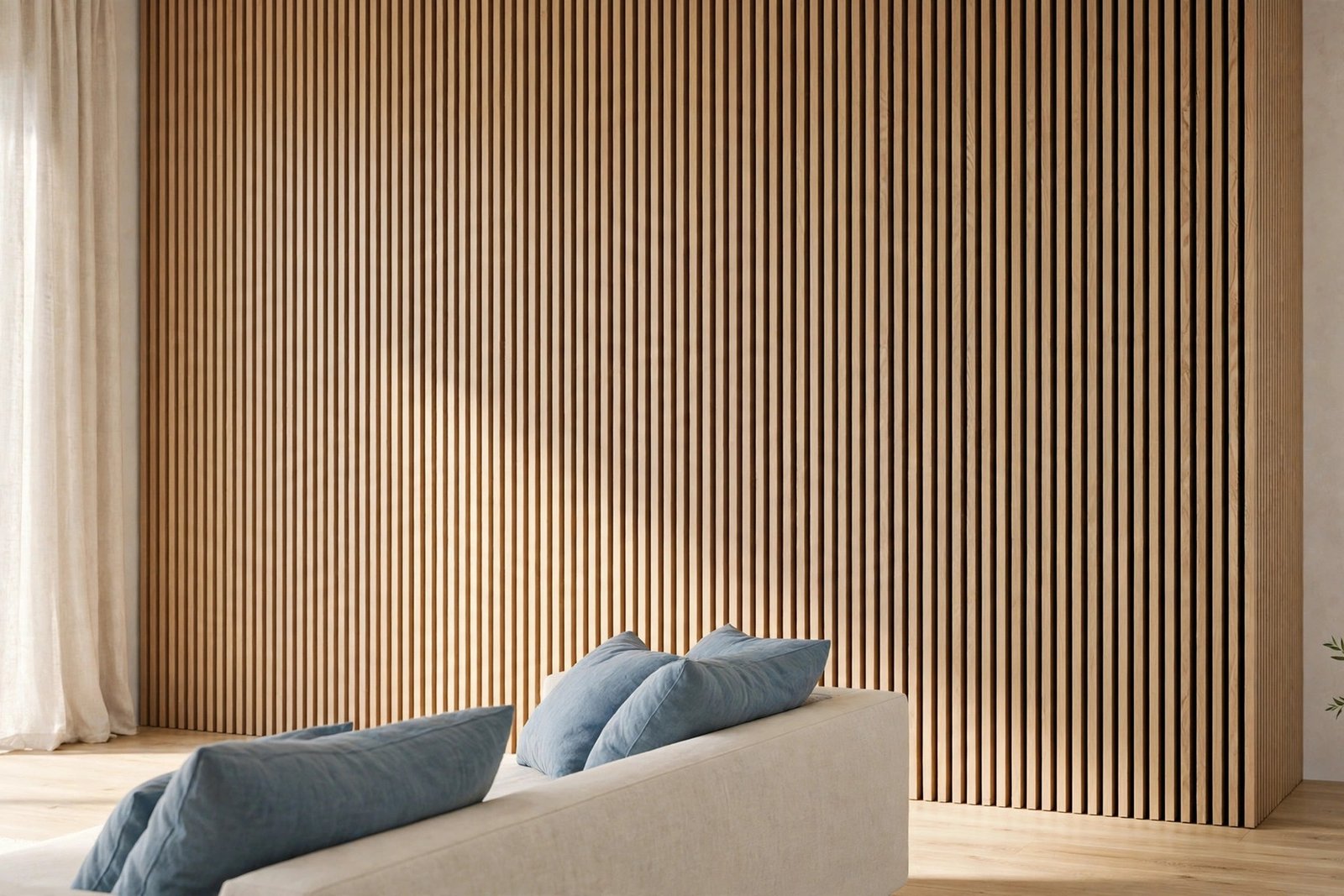
Vertical wood slats give a plain wall architecture. Fix slim battens in light oak or MDF floor to ceiling with even gaps, stained or painted the same tone as the wall for a calm look, or one shade darker for gentle contrast. The matte wood finish lets the natural grain show through, and the narrow shadows between slats add depth all day. Slats suit a wall with no door or window interrupting it; in a low room, stop them six inches short of the ceiling so the wall feels taller rather than boxed in. A full slat wall works beautifully in a living room or bedroom.
5. Layer Geometric Panels for a 3D Effect
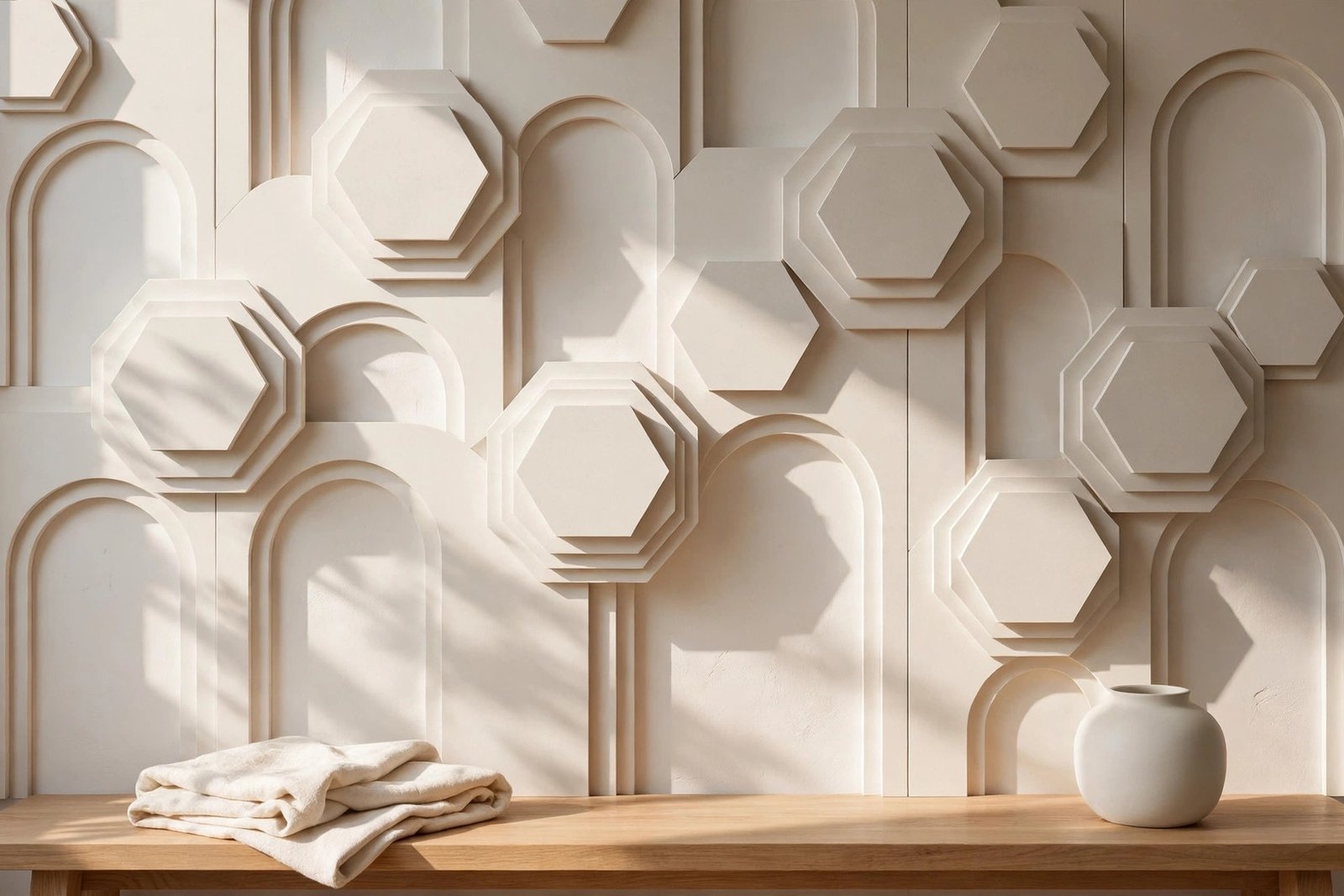
Geometric panels add depth that flat paint cannot. Mount interlocking MDF panels — hexagons, arches, or chevrons — in a repeating pattern, two or three layers deep in places, so the shapes cast soft shadows as daylight moves across the wall. Matte painted panels in one warm white keep the effect calm, and the interest comes from shadow and depth rather than contrast. Keep the panel color close to the wall color for the same reason. This treatment suits one feature wall in an entryway or living room, with a bench below to anchor the composition.
6. Group Mirrors into a Mirror Wall
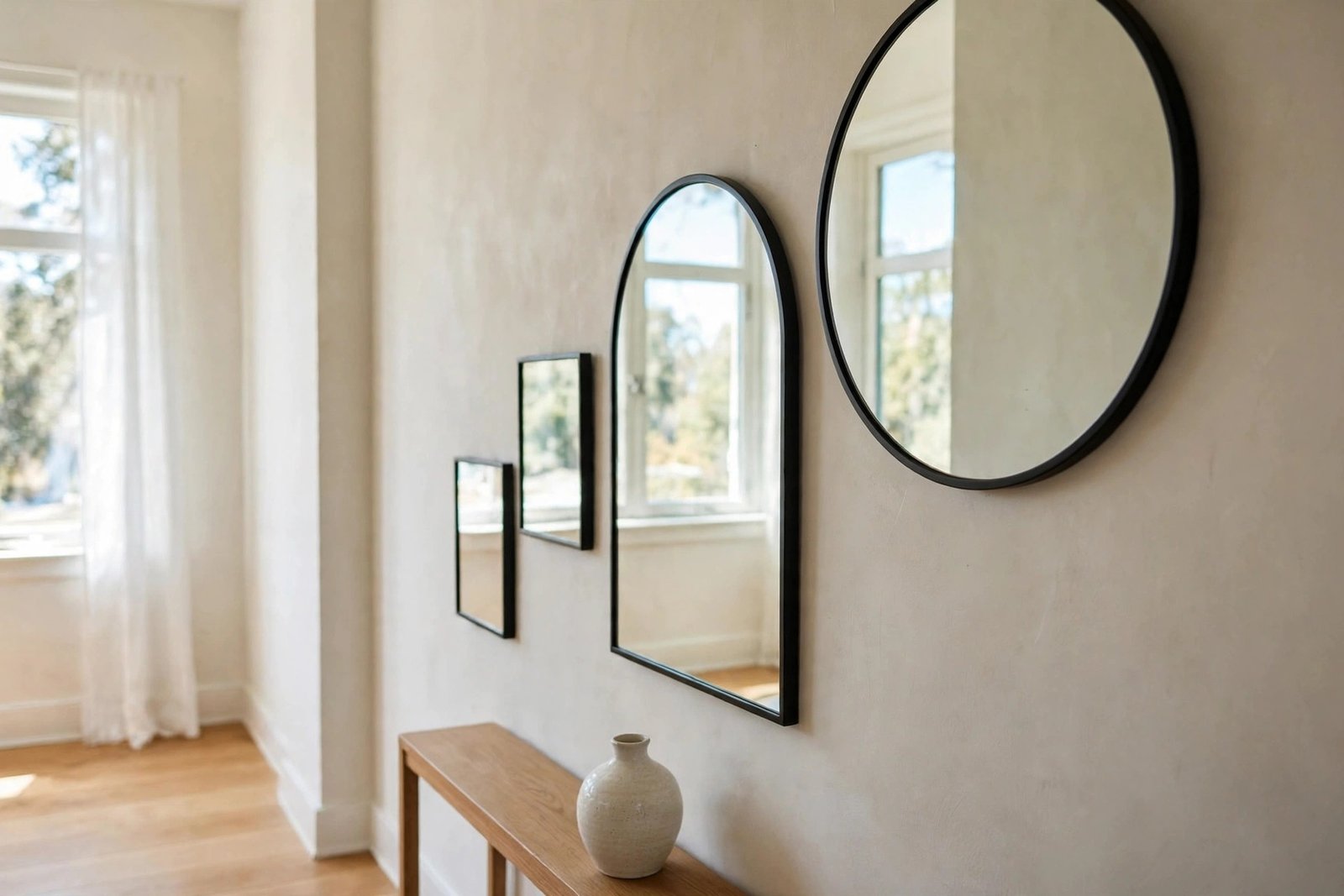
A group of mirrors does double work: decoration and light. Hang three to five mirrors in different shapes — one round, one arched, two small rectangles — at staggered heights, all in the same thin metal frame finish so the group reads as one piece. Warm brass or matte black frames with clear glass suit most rooms. Angle the group so it catches a window opposite; the reflection doubles the light and the view, which is the whole point of a mirror wall. A narrow hallway or dining room wall is the best spot, where the extra light matters most.
7. Float a Picture Ledge for Easy Swaps
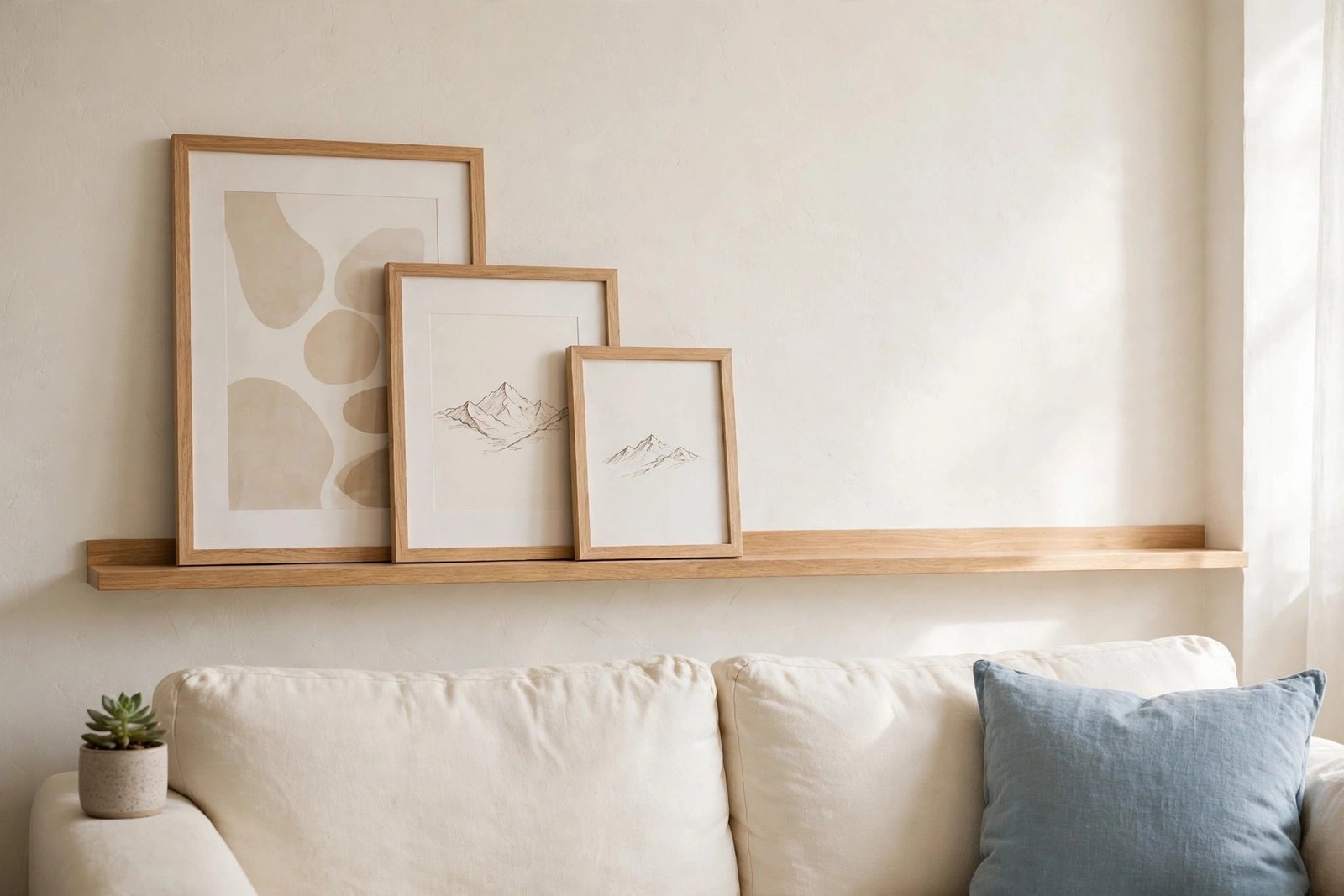
A picture ledge makes wall art easy to change. Mount one or two slim ledges above a sofa or bed and lean framed prints and small art against the wall on them, overlapping the frames slightly, so the display can be swapped without new holes in the wall. A light oak or matte white ledge with thin black frames keeps the look light. Keep the tallest frame at one end and step the heights down toward the other, and leave one ledge end empty so the arrangement has room to breathe. A small potted succulent on the sofa arm below softens the straight line of the ledge.
8. Style Floating Shelves as Wall Decor
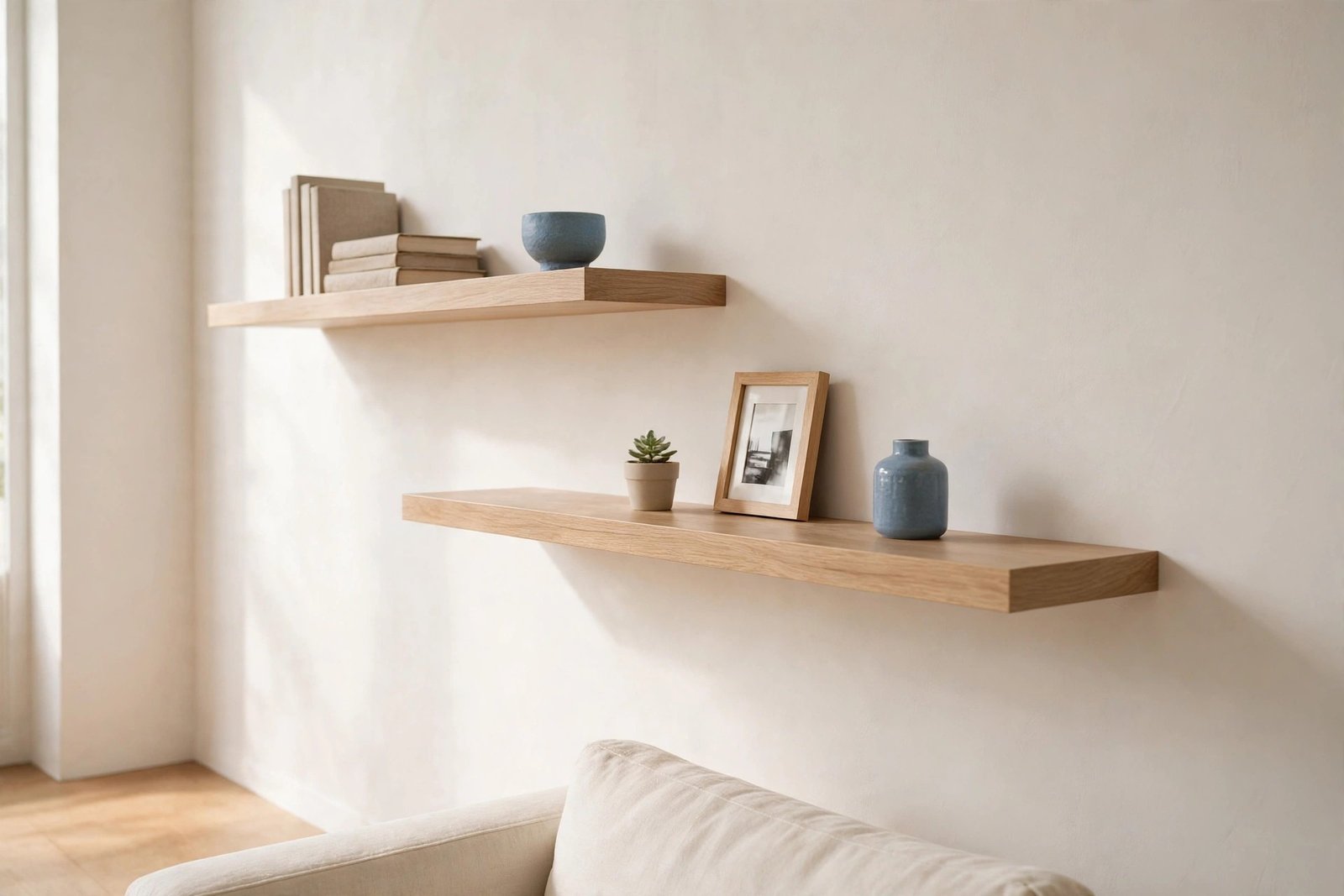
Floating shelves count as wall decor when they are styled as a display rather than storage. Mount two or three shelves at staggered heights on a blank wall and style them lightly — a small stack of books, a ceramic vase, a tiny plant, one framed photo — leaving more empty space than filled space. Light oak shelves with matte ceramic and linen finishes keep the wall soft. Style by odd numbers, three objects per shelf rather than four, and repeat one color across all the shelves so the wall reads as a set. A living room or kitchen wall suits this treatment.
9. Hang a Tapestry for Instant Softness
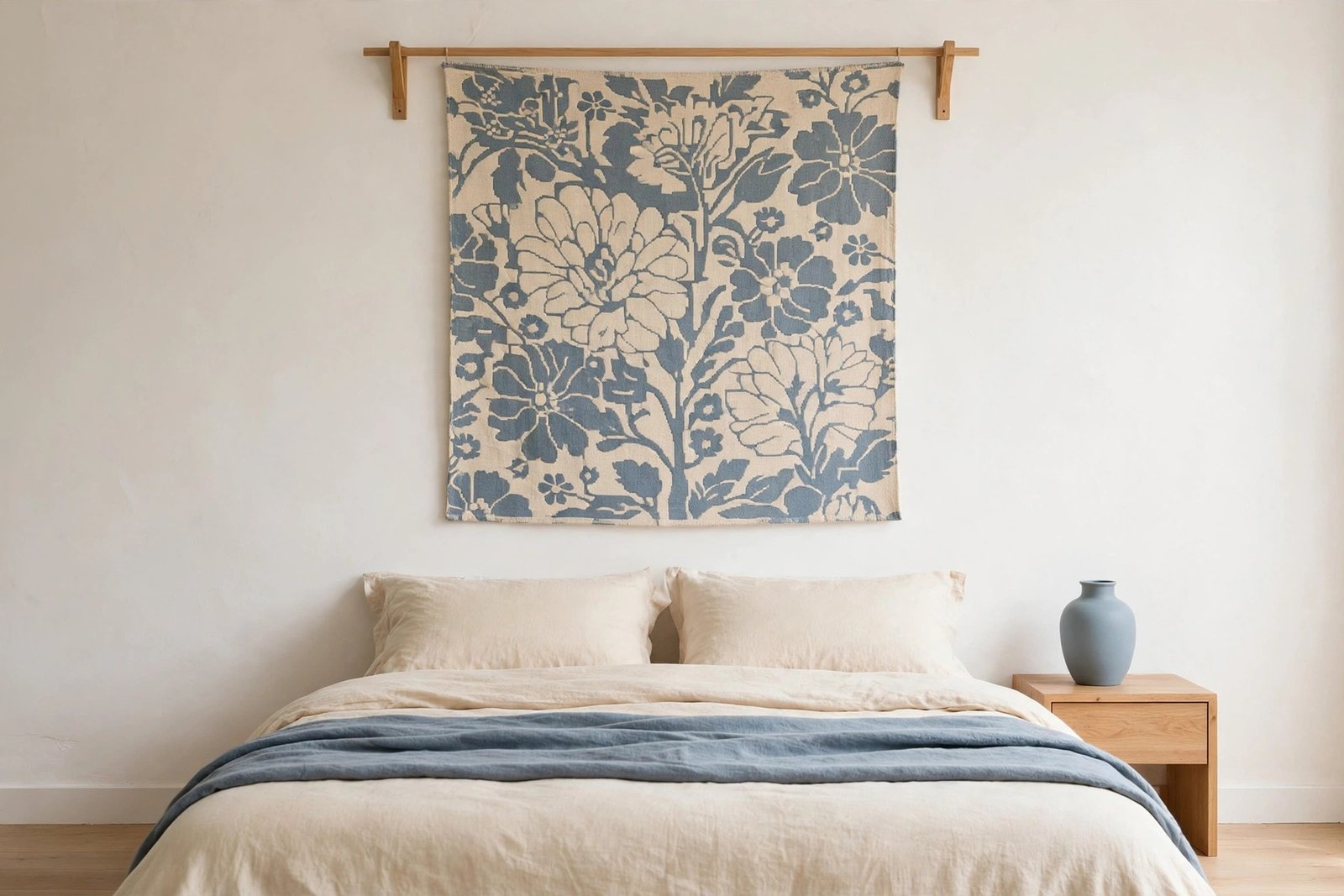
A tapestry softens a large blank wall in a single move. Hang a woven or printed textile from a slim wooden dowel, centered over the bed or sofa, letting it fall straight with no bunching; a large-scale pattern in muted colors reads best at this size. Soft cotton or linen weave in dusty blue and cream suits a calm room. Iron or steam the tapestry before hanging, since creases show from across the room, and keep the wall behind it a plain warm white so the textile carries the pattern. A bedroom or living room wall is the natural home for this idea.
10. Mount Sculptural Wall Sconces
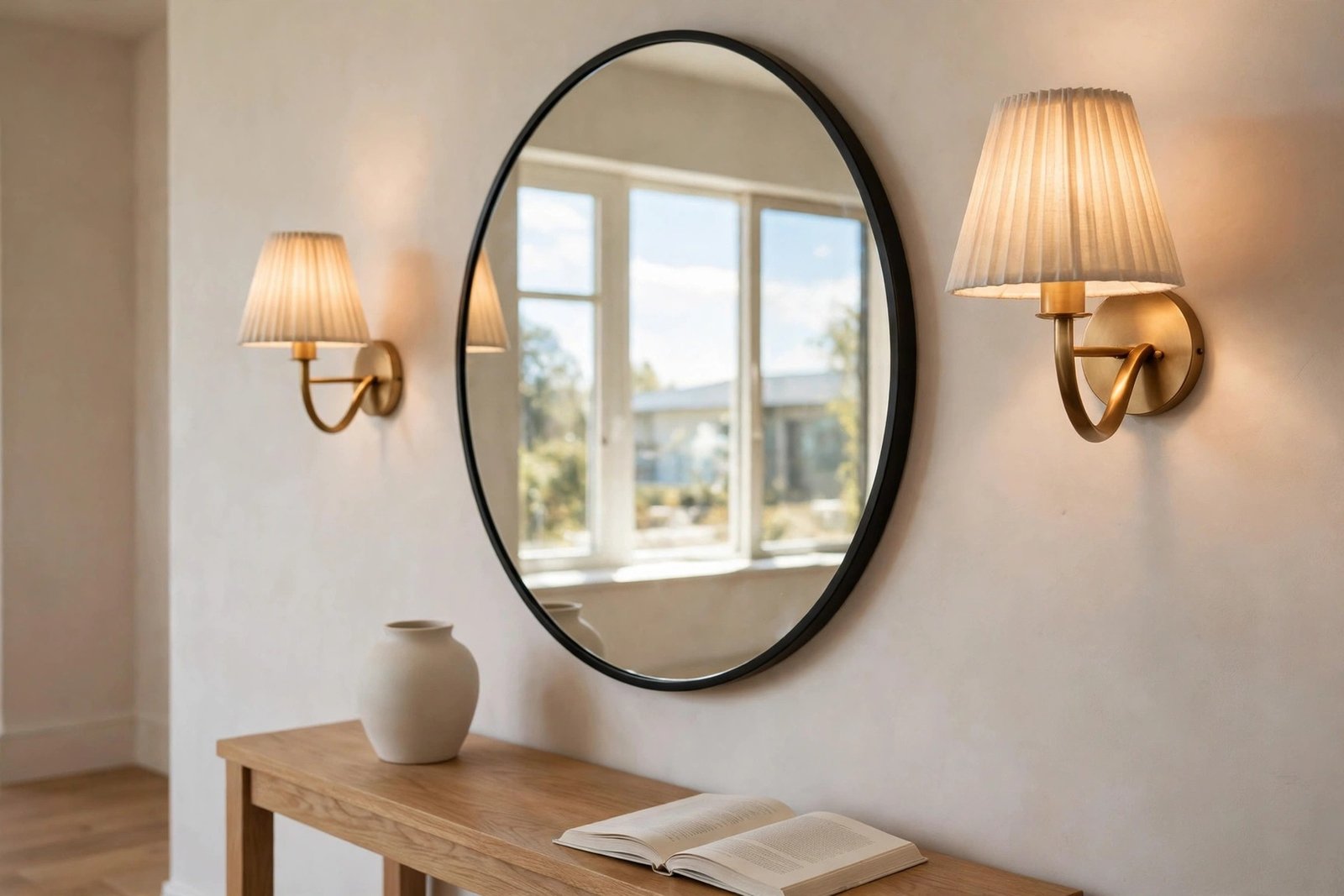
Sconces become wall decor when they are chosen for their shape as much as their light. Mount a pair of sculptural sconces — brass arms with pleated linen shades — at eye level on either side of a mirror or a framed piece, so the sconce itself is part of the wall composition. Warm brass with linen shades gives a soft, warm glow. Choose sconces with the light aimed up and down rather than straight out; the wash of light on the wall is what makes them decor and not just lighting. A hallway or living room wall flanking a mirror suits this treatment best.
11. Paint a Bold Arch Behind the Sofa

A painted arch frames the furniture without any hardware. Use painter’s tape to mark a tall arch on the wall, paint inside it one warm color — dusty clay, soft sage, or deep teal — then peel the tape for a crisp edge. Matte paint in one flat color keeps the shape calm. Hang one small framed piece inside the arch or leave it bare. The arch should be wider than the sofa by a few inches on each side so it frames the furniture rather than crowding it. A living room wall behind the sofa is the classic spot for this treatment.
12. Add a Peg Rail for a Flexible Display
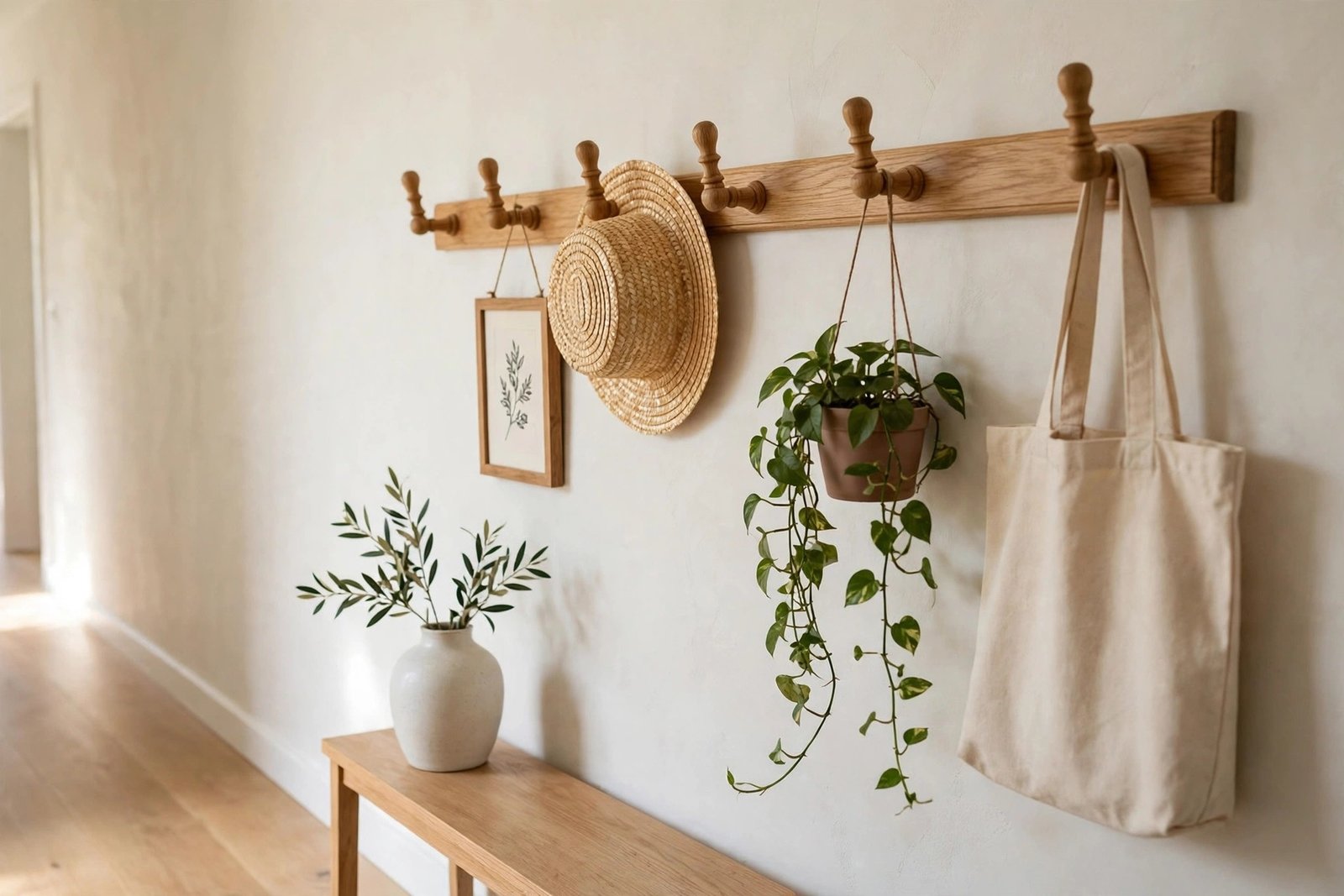
A peg rail turns a wall into a display that changes with the seasons. Fix a Shaker-style peg rail — a slim wood board with turned pegs — at eye level and hang a rotating display from it: a small framed print, a woven hat, a trailing plant, a canvas tote. Light oak or painted warm white with natural wood pegs suits a hallway, entryway, or kitchen wall. Swap pieces as the seasons change without making new holes. Keep two pegs empty at all times; a full rail reads cluttered, while a rail with breathing room reads intentional.
13. Frame a Collection in Shadowboxes
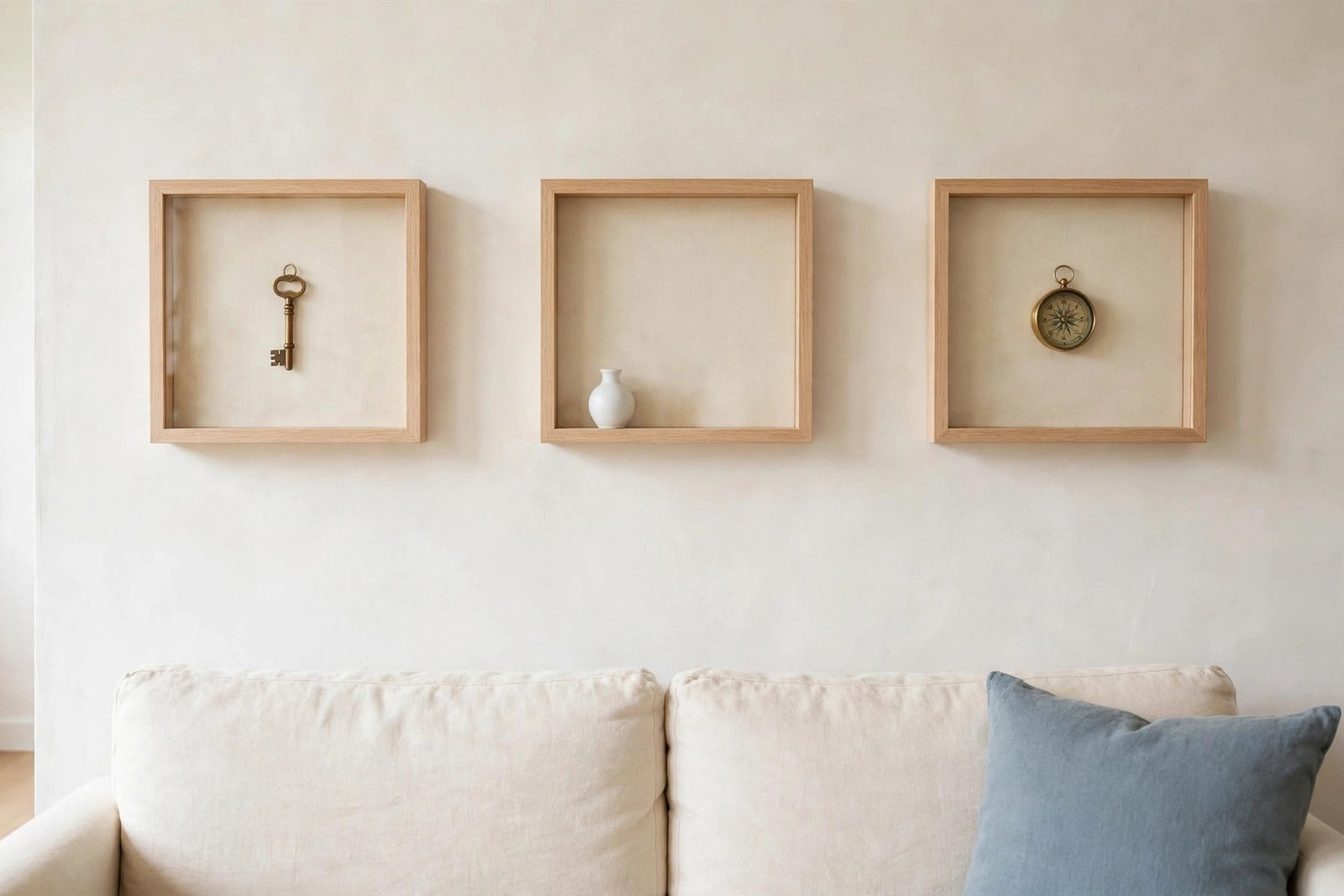
Shadowboxes give small collections a proper home on the wall. Build or buy shallow boxes in light wood with cream backing and glass fronts, and display one small object in each — a vintage key, a tiny ceramic vase, a brass compass — one theme per box, three boxes in a row. Give every object breathing room inside its box; one object per box reads stronger than three crowded ones. Keep the boxes the same size so the row stays calm. A living room or bedroom wall suits this treatment, where the collection can be seen up close.
14. Install a Lattice Batten Wall
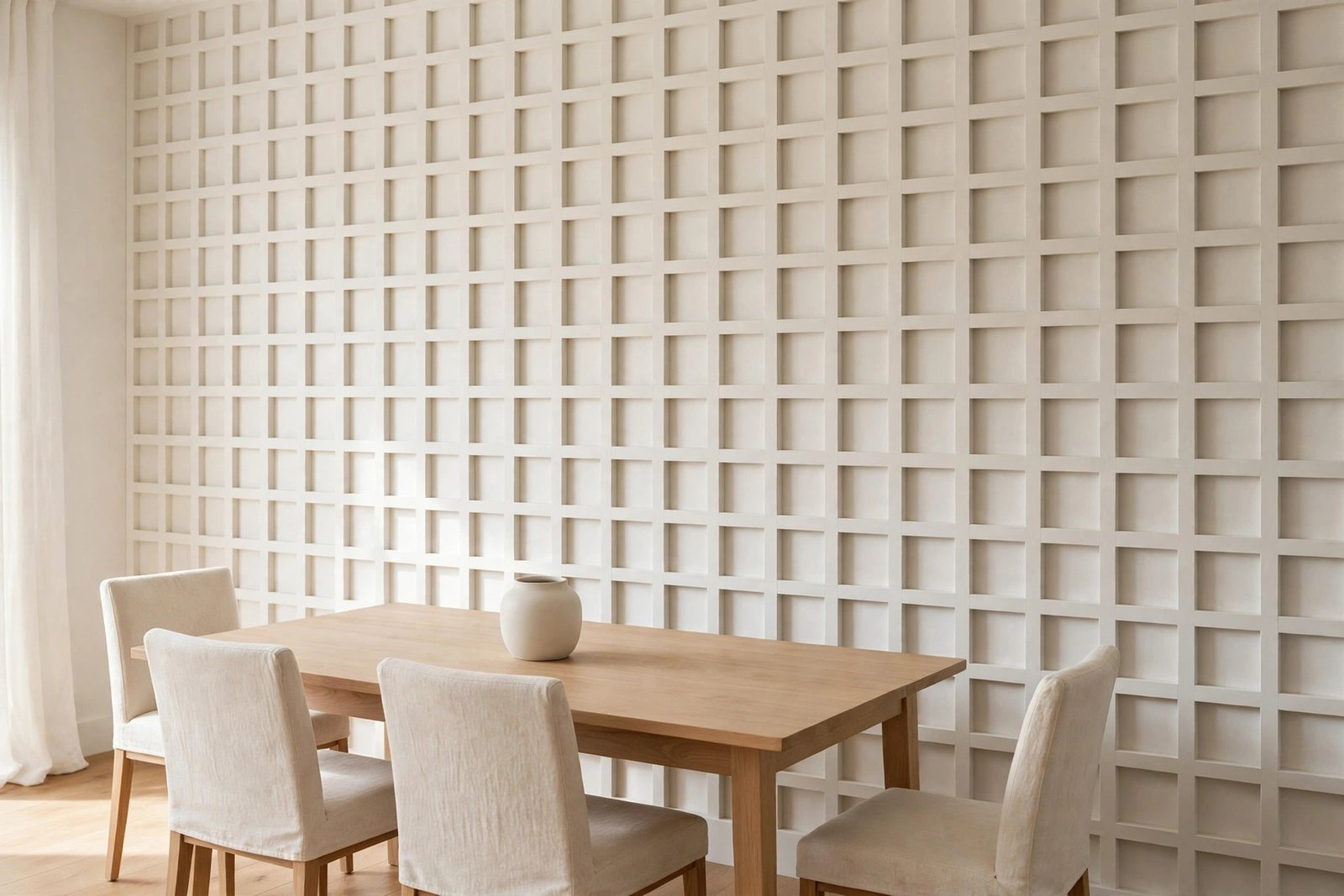
A lattice batten wall adds pattern through shadow. Fix thin lattice strips to the wall in a grid of squares or rectangles, then paint the strips and the wall behind them the same color so the pattern reads in shadow rather than contrast. Matte paint in one warm white keeps the effect soft and architectural. Measure the grid from the center of the wall outward so the edge pieces match — an off-center grid is the one mistake that shows. This treatment suits one feature wall in a dining room or bedroom, where the grid can run uninterrupted.
15. Hang a Peel-and-Stick Mural

A peel-and-stick mural is one of the simplest wall decor ideas for covering a whole wall with a scene in an afternoon. Apply a scenic mural — a soft landscape, a botanical print, or a vintage map — to one feature wall, smoothing from the center outward to avoid bubbles, then trim the edges with a sharp blade for a clean line. Matte paper in muted colors keeps the scene calm. Murals suit renters and commitment-shy decorators, since they peel off cleanly, but the wall must be smooth and dust-free first or the edges lift within days. A bedroom or dining room wall is the best canvas for this final treatment.
A finished wall changes how the whole room feels. Start with the treatment that fits the wall in front of you — plates for a dining room, slats for a living room, a tapestry for a bedroom — and let one wall carry the room. These wall decor ideas work best one wall at a time: finish one treatment, live with it for a few days, and move on to the next wall only when the room asks for it.